
Dr. Frederick Schurger and Dr. Beth Bagley had patients this week that didn't need steroid shots for their aches & pains after their atlas was adjusted. They discuss the strengths of the Blair Upper Cervical work. Many Upper Cervical chiropractors do not adjust segments in the middle of the neck, but Dr. Frederick Schurger and Dr. Beth Bagley do. They also have a bit of business talk because they are running a business & need to keep the lights on. Finally, they gave a quick overview of the Upper Cervical safety study that shows how safe this work is, as well as the level of satisfaction of the patients. Dive into today's conversation with Dr. Frederick Schurger and Dr. Beth Bagley!
We're having a good time. The show is getting out there. People are reading, and we appreciate everyone for signing up on the socials. Make sure that you like and subscribe.
It helps us so much.
Give us a five-star review, bits and pieces that get people to know about these things because there are so many problems in the world that can be solved by moving a little 2-ounce bone underneath your head. We're going to start with a couple of patient testimonials. First, I talked about this one where he's been reluctant to come in as a patient for about five years that his wife has been coming in. He’s an engineer. He’s very mechanical and methodical. Except when it comes to his health, he's like, "No. That's fine. I've had fusions. I'm good. I don't need it anymore."
One time, he came in, bent over, ready to get a bunch of steroid shots. He comes in again. They get here a little bit early because they got to get back home for a class. While he's here, he gets a call from the hospital saying, "We need to reschedule you. You had a 2:00 appointment." It was about 2:30 when they walked into my door, and this was for the shots.
His wife is like, "You're not going to get those shots." He's like, "I don't think so." He was holding his adjustment. He's like, "I'm feeling pretty good, doing the exercises that I'm supposed to be doing." I'm not saying that there's no time and place for steroid shots. There is, but quite honestly, I'm very excited that he was doing great and considering not needing them, at least at this time.
I've got a similar story. This lady started coming in. She was a referral from another patient. It’s the typical back pain, neck pain, some neurological things going on in her head and neck, and some pretty intense knee pain. It's always funny because, in my opinion, that's how the body prioritizes things that get well fast. We don't have control over it. As doctors, we would love control over it, but we do not have control over it.
She's doing well. She was holding her C2 adjustment. She needed a lower one, but last time, she told me something all of a sudden after the first adjustment. She thought it was a fluke, so she didn't even say it after the first one. Her knee pain went away, and she was waiting for it to come back. It hasn't come back. She's also canceling steroid shots for her knee, and I thought that was amazing.
It's fantastic to hear that. For the medical doctor out there who does all the shots, and that's your bread and butter, I'm sorry, we won't take them all, believe me.
We won't. There are some patients that might need it to help them to survive. We get it.
I heard the craziest thing from one of my long-term patients. She's been with me for a while. Her knee has been giving her grief. She got some shots to get a little bit longer. Her mother, who was suffering from Alzheimer's, had passed away. She'd been a caregiver for her, so she's able to take care of herself and get this surgery. She knew she'd be laid up if her mom was still around, so she finally did that. The shots helped keep her moving so she could take care of her mom.
I've never heard this phrase used clinically, but she had end-stage osteoarthritis. I've never heard of that, but he says, "We needed to do this surgery and take care of this knee for you because that's how bad it was." I don't know what end-stage arthritis is, but that sounds bad. Anything longer than that sounds like a fusion.
Where does it go after the end stage? It's not death. You hear end-stage cancer. One of my patients jokes because he doesn't have back pain anymore. He used to say he had stage five back cancer when his back hurt. He's a little dramatic.
That's a little bit over the top. I would concur. In getting onto our next topic, I have another patient who was hurting so badly. We got back from a trip down to Little Rock, Arkansas. His wife's like, "David needs to get in badly." I'm like, "Okay." I'd seen him a couple of times. He had something land on his head at a job site. He comes in, and sure enough, his atlas and C3 were out of place. Only a week earlier do I take new pictures of him, and I find that C3 is out of place, so we adjust that. He was back holding his adjustment for the first time in a very long time. He's then out. Atlas and C3 were fixed. They're back and he's holding again. It's working in the right direction.
I'm going to write up a paper. You and I might have to do this jointly because if you've got enough cases, it'll be a case series, is what I'm thinking. One of the things that we do differently in the Blair work than other upper cervical docs do is we focus not only on the atlas. It's two parts. We look at the atlas and the lower cervical as individual pieces. Not only are we addressing these pieces a little bit differently than some of the other orthogonal upper cervical techniques do. They do address them, but it's not in the same fashion. We look at them individually and anatomically differently than those other techniques do. Sometimes that's the missing link for the patient to get better.
I often see C3 and sometimes C5 as randomly one of the ones that could be holding someone back. Three different patients who don't normally have a C2 or C3 misalignment. It could be C2 or C3, but they all were coming in, and it was hard for them to turn their head. When they turned it, they would get the stabbing pain in, I call it the spot, which is right where the trap sits. It's pretty much right between the shoulder and the neck, towards the back but above the shoulder blade. Not that I like when people are hurting ever, but I like to adjust that one because it's so quick. It's not all the time that it's quick. Sometimes it takes 1 day or 2, but at least the range of motion change is pretty quick where they can turn their heads again and they're like, "I think you got it." I was like, "I know."
The first time that I had my C2 go out was right after my sister's wedding. I've told this story before. My brother and I were not horsing around. We were just going down to the pond to go swimming. It was not even a crazy dive. It was very controlled. I swam in high school, so my form is okay. I don't swim a whole lot anymore. I'm doing a very easy breaststroke over to the sandbar. I come on up and I'm locked up as if someone took a screwdriver between my shoulder blades. That was uncomfortable. It took me a month before I had an old-time doc say, "This number two here, let me get that for you." That changed my perspective on all of this.
It's funny because Dr. Drew Hall, who's down in Sarasota, Florida, sent a patient my way who winters down there but she happens to live in Springfield. She's like, "My number twos need to go back into place." She'd been to upper cervical care under a different upper cervical technique, one of the orthospinology folks here in town. It worked, but it didn't take it to the next level or the last step that she needed to get her well and keep her well. It's so curious how these people fall into our laps for better or worse.
I do think in a perfect world that the body is working exactly like it's supposed to be and then there's an atlas subluxation. When we move atlas in a perfect world from top to bottom, everything is restored. I meet a lot of people who don't live in the perfect world.
I live in that perfect world, and I have yet to figure out what that absolute place is. It is a real trick to address these things. In the perfect world and the world that was years ago, we did not have nearly the severity of injuries and accidents that we have available to us. We have a smorgasbord of ways to hurt ourselves. The thought in my head, going back to talking about whiplash and concussions, is that we get this weird buckling of the joints along the way where one will go one direction forward, and the other one will go backward. It goes through this back and forth, forward and backward, which means left to right.
Ideally, in a simple injury situation, everything is going to go either to the right or to the left. You're going to be cocked around like this, as opposed to some weird back and forth that causes things to buckle in odd places. That's more of what we're dealing with, modern injuries and accidents. Gay for modernity.
When we talk about modern injuries and accidents, maybe it's even longer than 40 or 50 years. In high-speed collisions, a couple of things that are going better is that we used to have the seat belts, and then the seat ended here. People's heads would whip all the way back over the seat. We've got a headrest. People sometimes think headrests are there for comfort. No, they're here to stop your head from whipping back. You can still get a whiplash even with them, but it's better. That's the other thing, making sure your headrest is up high enough above your head.
People sometimes think headrests are there for comfort. They're here to stop your head from whipping back.
You and I have a problem because even in larger trucks and vehicles, it still only gets to maybe right at the back part.
If you're tall, you need it as far up as it goes because it's not for your comfort. It's to stop your head from whipping over it. The tendency is that if you get hit hard enough, you'll lift in your seat and still go somewhat back. Do your best to make sure it's high enough.
The other thing to think about is the way cars are built now compared to many years ago. This goes back to my time in automotive plants and engineering. We used to have bumpers on cars. We don't have bumpers on cars anymore. Everything is that plastic fascia. It is foam-filled. There is a piece of foam back there, or behind that you never see. You won't see that piece of foam if you're in an accident. They'll see it at the auto body shop. That piece of foam if they pull that off and it disintegrates, which is what it's supposed to do, they have to replace that piece of foam before they put your car back together.
With an old-style bumper, there was a cylinder that also needed to be replaced. It was designed to explode. You would hit, and that cylinder would pop out of place to deflect the energy that was coming into the spot, except those things were expensive to replace. That's why they got rid of them because there's got to be a more cost-effective way for a collision.
At what cost? It's not the cost of fixing the car. It's the cost of damage to the tissue in your body, which is why we see these more problematic. There are lots of concerns and things. Consequently, we've seen more reverse curves. Instead of seeing that nice C-shaped curve, we see an S-shaped curve because you've got this back-and-forth motion.
Your neck is supposed to have, I call it, a banana. The circular part of the banana faces forward. That's what it's supposed to do. When it happens, it straightens out, so we need it curved. My goal for anyone isn't to get the curve back. There are some chiropractic techniques whose goal is the curve back. I want structural integrity, and I want your body to be functioning as good as possible. If it’s with a curve, your body will do it. If it's without a curve, I'm okay with that too. I do like seeing curves. It's great, but I'm not going to force a curve to come into somebody's body.
This comes back to those lower cervicals that need to be addressed, sometimes individually. Sometimes the atlas will bring that all together, and the curve comes back overnight. I've seen a negative forward positioning reverse back to a normal curve in young children and some adults. People that have been in car accidents, we're going to be working on that forever, trying to get those joints to work back to where they're supposed to be.
Speaking of injuries that I'm seeing from things, I've noticed some interesting ones. In spring, there are gardening injuries, about twelve of those. People are overdoing it in the garden, coming in and annihilating either back, neck, or both. The other thing is pickleball. Do you guys have pickleball there?
They do. I have yet to play. I have several patients who swear by it.
They love it. It will keep us in business. Guys, keep playing pickleball when you are a little old. You maybe haven't worked out in a long time, you go play pickleball and you give it your all. I'm laughing with them because they know they're doing it to themselves. We are seeing some pickleball injuries. I've only seen it played. I've never played it either, but it looks fun.
It’s with any of these sports and anyone getting back into activity. It’s not that we had a long winter. We had a very short and mild winter and a long pollen season. We're coming right into summer 2023. Thankfully, we're getting a couple of reprieve days with the rain in the cold. It is coming right on in, and it's going to be a hot one.
I want to talk about being a business owner. I have this thought process. There might be some people out there who are maybe thinking about being chiropractors or being in the service industry. I have a couple of things that come to my mind about when you're renting a location because you rent also. I rent in a location that's right next to a sushi restaurant on one side and a dry cleaner on the other side, but they don't do actual dry cleaning either. That's just a place where they take it out, dry clean, and bring it back. I don't want dry cleaners right next to me because there are lots of chemicals. It's a place for people to pick up and drop off.
That's why they've done it in this fashion because the EPA rules are probably so ridiculous that they said, "We have one large warehouse building that we have to worry about, and these are the drop-off places." I am so amazed at how fast they do all of that. I will drop off stuff because I've got a place like that down the road. I know they do the same thing. Yet, I've got my dry cleaning back in the afternoon if I drop it off by the right time. They're very fast.
The last thing is, right next to them is Subway, which is one of the healthiest places you can eat. No, I'm being facetious. Everyone knows what the smell of Subway is. If you're going through an airport, you know there's a Subway coming up. Like a Cinnabon, you know what Subway smells like. You walk into Subway, and you're like, "Definitely Subway."
What happens when Subway's fan breaks? Do you know what else smells like Subway? My office. Every time they're baking bread, it smells like Subway in here. It's not good. I could tell when they were baking the cookies. I even knew when they were cutting the onions. Their fan just got fixed. That's why it's at the top of my mind.
What I wanted to talk about is why all of these tiny things matter when you're starting a business seems so overwhelming. What's cool is that you deal with the stuff when it comes up. If somebody out there is wanting to start a business, know that you don't have to figure all of it out all at once. That's overwhelming when you try to think of it like that, but it's one step at a time. That's the same thing as building chiropractic practices. You meet one patient at a time. We change the lives of these people one at a time. What's so cool is that's how any service-type business, whether you're a CPA, works. We have the coolest job, though, out of all of them.
Equivocal, I'm finally fed up with my EHR system or Electronics Health Records.
That's the computers that the doctor would use to take the records and the servers.
All my nurses, billing stuff, and talking back and forth with patients, I haven't liked it for a while. I finally said, "I'm motivated. I'm going to make this stuff happen." To your point, there's going to be a lot of work. It's going to take a while for me to get everything put together, and it switched. However, it's a pain point of understanding that you don't have to know how to do everything right off the bat. You don't have to do everything immediately.
It's funny because I talked to another colleague of ours. She doesn't do a cervical, but she's a patient. She was making the same comment. She's like, "I'm done with that company." She's got this same billing stuff system I've got. We're both going to the same new system because we're like, “We’re tired of this. We've heard so many good things about the other system. It's time.” Sometimes you say, "I'm going to do a little bit today, a little bit tomorrow, and the next day." Before you know it, it's done.
This applies to not just business but everything in life. The best time to plant a tree was years ago. The next best time is now. If there's a thing to be done, you've got to start chiseling away at it, especially if it's giving you pain points that are preventing you or your staff. In my case, my spouse. My wife helps me out with some of the billing. I see her spreading over this thing every month that she has to do pretty much by hand. She's got a system down.
If I can hit a button, it automatically emails to the patient. I don't have to worry about the printing. We may still print for some but I don't have to do all the extra work for it. The Amish people would be the exception because they don't have insurance. That would be the difference there. It's all the little things, and it's getting under care. I don't want to start because once I start, I'm not going to stop.
I'm afraid to meet a new doctor because you've had bad experiences with doctors in the past.
I had a potential patient come in here. He's like, "Doc, you're doing all the right things." He saw how I was dressed. He says, "I like how you're dressed. I like the way you talk and say things. I don't want to pay for a new exam in X-ray." Anywhere between the $300 to $500 range is a very common price for a new exam in X-ray in an upper cervical office. That's a price tag. You're paying for the expertise, and he wasn't comfortable with that.
That's a lot of work.
It is. We make it look effortless, mind you. We put a lot of work and effort into making sure we figure out exactly how each segment's built, how they are out of place, how we're going to put them back into place, and knowing what not to touch too to understand that about a patient. He's like, "Doc, I've been under care forever. I like what you're doing. You're in that Palmer Method family. That might mean something different."
He wasn't comfortable with what I was recommending to start. I said, "I've got somebody for you. If you don't like him and you don't get better with him, he is going to send you right back over here because he understands what I do and how it's different." These are all the little pieces, but you got to start and figure out, "Is this the right path?"
Valuing yourself too. If the transmission in your car goes out and you need your car to get to work, you're going to pay $2,000 and find a way to pay it. It sucks. I wish you didn't have to spend it, but you're going to find a way because you value your car to get to work. How much more important is your body than your car? Infinitely. I do think insurance has ruined a lot of people. People think insurance should pay for everything. I wish it did. That would be amazing, but it doesn't, especially doctors, not just upper cervical doctors.
Medical doctors are getting out of the game.
Tons of doctors are, and because the insurance companies are only out for themselves and not out for you, the consumer. Value yourself as much as you do a car transmission. If you needed a tooth taken out and you're not going to have dental insurance that pays for that fake implant, that's another $3,000 right there. You want to smile and not have people stare at you, so you're going to pay that $3,000 for an implant. Could you survive without it? Absolutely. You could survive without your car.
I'm going to tell you, if your nervous system and body are breaking down, you're going to be so much happier that you spent that money now versus waiting when it's time for surgery. You're never the same after surgery. It's never exactly what you want it to be. It might be better than where you are right this moment, but it doesn't get you well. It cuts out the pieces that are broken.
You don't need a car. You can get around on the bus system or you can bike, but what is your quality of life? What are you capable of doing or not? Somebody came in and said, "Doc, I hate it when I can't think straight. Get my head on straight." That's what we did. It's funny because we're close in price tags as far as our rates. It might be somewhere in that $2,000 to $2,500 for an initial plan of care to make sure you're stable, and then it's less. Maintain that.
The initial phase of care for anything, hopefully, most chiropractic offices, but mine and yours are more expensive. Honestly, once I hear about what people are spending on dental care, I keep going, "I need to raise my prices." I'm not going to do it based on that. I want the care that I'm offering to people to be accessible to lots of people but I also need to keep the lights on in my office.
We have our expenses and bills. We won't talk about inflation because I don't understand that.
It's bad. That's what hurts me because people's paychecks aren't going up, but all the prices are going up. I haven't raised my prices yet, but I probably should.
Let's ask two questions. 1) Is upper cervical care better than regular chiropractic care? I've got a study for this. 2) Are there any risks associated with upper cervical? Let's hit this research paper and then wrap it up.
I'm going to answer because you're looking that up. Do I think upper cervical care is better? It's different. I almost put it on a different level than chiropractic care. Conventional chiropractic care, although amazing, and some of my best friends in the whole world are conventional chiropractors. They know what I do. I don't want to call upper cervical chiropractic, chiropractic. It is chiropractic, I know but it's different.
It is a different step of what chiropractic was developing, and it still is one of the more advanced ways to address the human frame and the anatomy of our body. Let's go through this study real quick. What are the risks of chiropractic? Back in 2011, Dr. Kirk Erickson and a couple of others did this study, where they collected data from over 1,000 patients. We had 88 doctors or so in this study.
It's a pretty large study considering upper cervical as a smaller community. I do get this question from people. "Can chiropractic cause a stroke? Can this hurt me?" I love answering it because there are multiples but this study especially.
This study, in particular, drives this home because the first step here is we've got the symptomatic reactions being either intense or serious. What do these mean? A symptomatic reaction is a new symptom or a worsening of an existing symptom by more than 30% following UCCC as an upper cervical adjustment. They defined intense as anything above eight. Anything that was a serious adverse event is a life-threatening reaction or hospitalization.
An asymptomatic reaction is a new symptom or a worsening of an existing symptom by more than 30% following UCCC as an upper cervical adjustment.
We had 83 doctors in this study and over 1,000 cases. This was only upper cervical. Most of these were atlas or axis combined. We had 338 patients out of the 1,000 that met that symptomatic reaction. That had an increase. Only 5% of 56 patients had an intense change. In earlier studies that were done by Rubenstein, he used adverse events. This was general chiropractic that most people are familiar with. Unfortunately, I'm going to use the term "rack them, crack them." They would've had a 56% compared to 13%.
You can get sometimes really sore, especially after the first upper cervical adjustment. We explained that to a patient. I get excited when you get sore because I know your body is responding. It's awesome.
The difference is 31% had a change for the increase in pain and discomfort, whereas most people think.
It's diversified from what you see on TikTok and YouTube.
That was at 56%. Half of that population had that.
That's a lot. I wouldn't have thought about that.
For the intense, the over 8, they would've had almost 3 times. Fit 13% versus 5%, which is no serious adverse events occurred in all these 1,000 patients. Of the 83 doctors, many who had been practicing for 20, 30, 40, or 50 years have over 5 million career adjustments without ever having a serious adverse event. Not to say that it can't happen or will never happen, but that's a lot of doctors, patients, and adjustments. Here's the upside. We don't tend to adjust every time you come on in. We can spread those visits out further. If there is a risk, however small, it is even smaller when we don't need to do it as much.
One of the risks when people talk about stroke and chiropractic is when the doctors or chiropractors twist the neck. There is an artery called the vertebral artery that has the potential that usually the patient already has an event in progress and has neck pain because of it. The doctor twists their neck and makes it worse, which is not great. A stroke can occur, and it's awful. We never ever want anything like that to happen. What's cool about almost all of the upper cervical techniques that are done is there is no twisting of the neck. Even if somebody did have an event in progress, God forbid, this wouldn't make it worse. Hopefully, we would see the warning signs and send them to the ER.
For the symptoms, the common reactions that people were having, tiredness or fatigue, was the highest. It's the radiating pain or shooting pain. Neck pain was up there at 5%. Dizziness was under 5%. I see that one more commonly because what's happening is we're increasing blood flow to the brain. All that's happening. That could be part of the headache as well associated with dehydration.
I see tiredness or fatigue of more than 10% after the first adjustment. We worry people about it. Maybe they don't complain about it or they just go to sleep. I also hear people having the best night's sleep of their lives for their first adjustment. I love that.
That is very common. Patient satisfaction in this survey was 91%. In the same Rubenstein study, they had a smaller group but still a large and good group of 77%.
That's still fantastic. That's why I'm saying these doctors are doing good work. First of all, if you've read the previous episodes, we've had personal experiences with why we chose this. When people come into the office, if they have a subluxation or a misalignment that is causing nervous distress, I expect them to get well. I am surprised if they're not getting well, and I'm trying to figure out why.
I've got one who's not responding as well as possible. We're coming to that point where she's still having problems. I changed some stuff up and we're going to see where she's at. She's like, "We've been doing this for 3 or 4 months, doc. I'm still not seeing stuff." I'm like, "No. We've got to reevaluate stuff." I might say, "We're going to take the month of June off. You go play a bunch of golf. Come back in July and then we're going to double-check stuff. I want to see how you're doing." She plays golf, maybe newer to golf but maybe she'll notice that her golf game gets worse. There's something else that has crept back in because sometimes the change is so subtle and gradual that you don't even notice it.
Sometimes it's like a switch. More likely, it's a subtle change over time. When we reevaluate and we're like, "You had this," they're like, "I forgot I had that." I love when you forget about it. That's great.
I've got this last table here that we're going to go over very briefly. Most of these people were coming in with some neck pain dysfunction. A good number two, almost coming right in behind it was low back pain. We see good results with that. Number three was headaches. Some mid-back pain and some upper or lower arms and legs. Fibromyalgia was a small component. This was general. As patients walk into the office, they present it.
Most patients are going to have neck pain and back pain.
That's what's drawing people into any chiropractic office though, but we do see a lot of fibromyalgia. This equilibrium would be a balance of your type of things like vertigo. TMJ is common.
We see a lot of those.
Facial pain would be that trigeminal neuralgia we talked about a couple of episodes ago. We'll talk about the blood pressure study at another time. I want to find the second follow-up study. A couple of other things. Only six people came in for wellness care probably because they were a family member of another patient. In any case, that is what that is. It's great to know that not 91% of patients were happy in this study.
They’re highly satisfied with their chiropractic care in an upper cervical office. That's what we feel. We feel the love. We love the love. It's incredible. Whoever's reading out there, I want that for you. Find an upper cervical doctor and get checked. Worst-case scenario, they'll check you and say you're fine. What if there is something going on? You can live a healthier and better life by getting your neck checked. Do it. Invest in yourself. You are more important than a transmission.
You can live a healthier and better life by getting your neck checked. Do it and invest in yourself. You are more important than a transmission.
That will wrap it up for this episode. That's a better place than we did where we went depressing. Dr. Bagley, where can they find you?
You can find me in St. Louis, Missouri. We're on the Westside. We are at precisionchiropracticstl.com/.
I am in Springfield, Illinois at KeystoneChiroSPI.com. You can find us on all the socials. Search for that.
Click around, and you'll find us.
That is it. Make sure you like, subscribe, and share with your friends. Maybe they'll read this and be like, "I need to go find one of these upper cervical doctors." If you're not in our locales, let us know, and we will help you find somebody in your locale.
We’re happy to.
Have a wonderful evening, day, or night. We will see you for another episode of the show.
Take care.
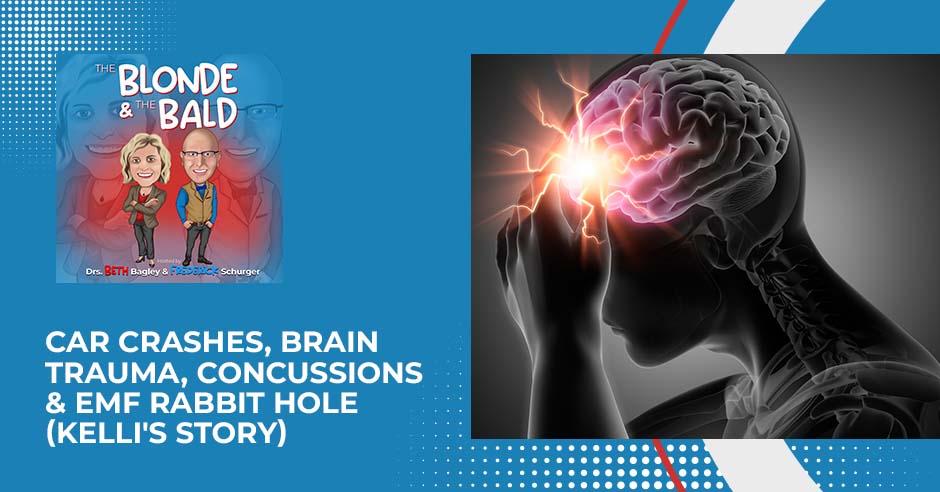
Through the wreckage of car accidents, Kelli found resilience and healing. Her journey unveils the profound impact on the body, from concussions to traumatic brain injuries. Join Dr. Frederick Schurger and Dr. Beth Bagley as they hear Kelli’s story and explore the profound impact of car accidents on the body. They delve into the manifestation of concussions and traumatic brain injuries. Kelli shares her recovery through Blair Upper Cervical, and shares how people going through accidents and brain injuries can seek proper recovery too. Moreover, beyond Kelli's car accident injuries, an intriguing aspect of her case emerges - the potential link between post-concussion cases and exposure to electromagnetic fields (EMFs). Dr. Schurger and Dr. Bagley discuss emerging research and explore the potential influence of EMF on the recovery process after experiencing a concussion. Join us in unlocking the complexities of Kelli's journey. Tune in and learn more about car accidents, traumatic brain injuries, and the interplay between EMF exposure and recovery.
Listen and read the full blog post here
Dr. Bagley’s patient experiences periodic headaches thinking it is normal. It was not! Phillip shares his harrowing story about recovering from Trigeminal Neuralgia. Then Dr. Schurger goes full-on nerd on the trigeminal nucleus, with Dr. Bagley reigning him in. Then they wrap up by sharing about a couple of patients who improved their quality of life from care. Tune in to this episode now!
https://linktr.ee/theblondeandthebald
---
In this episode, we got a special guest with us. His name is Philip. He is one of my patients that I love and care about so much. He said he would share his story or pieces of his story with us. I'm excited to hear about it. I'm going to start by asking him some questions. Is that all right, Doctor?
It sounds good. Let's go for it.
Philip, you started chiropractic care quite a long time ago but you are dealing with something called trigeminal neuralgia and some other things that happened to you. Upper cervical has been an integral part of helping keep you out of the hospital, which is awesome. Tell us your story of how things began and how you arrived at where you are.
After nearly twenty years in construction and heavy equipment, that may not be 100% of the culvert but that was a lot of heavy equipment rides, rough and 2 or 3 car wrecks being rear-ended the whiplash and 3 other circumstances that could have brought it on the whole combination. One day I woke up with a headache. I would get periodic headaches. We thought they were normal but they weren't.
What brought attention was when I woke up in such pain. I could not physically lie down for over 40 days. I could not physically lay down in any position, not even on my stomach. It was severe. My wife even thought I might be going into shock. When I would sleep, I would have to sleep sitting up, propped up in a corner from exhaustion.
My dear 84-year-old mother took me to a doctor that did upper cervical care that she had heard about in Springfield, Missouri, which is where we were based. Slowly, I started getting better. I will back up a little bit. I was to the point that the trigeminal neuralgia would come and go on top of the pain that was stopping me from lying down. It would increase dramatically. I could not lie down. I was ready to have all my teeth pulled. The oral surgeon called my primary. He thought I had trigeminal neuralgia. There is a sports medicine doctor. I went to him also. He verified it along with a couple of other doctors. With that trouble, I went to several different doctors of different care specialties.
Dr. Curtis Horgen in Springfield was the man that got me started on this. It took several years. The trigeminal neuralgia would last about 40 minutes. There were no short verses, nearly times 40 minutes of it. They checked me for a stroke because the pain was severe. I started coming up here to visit grandchildren. Dr. Fortune notified Dr. Bagley, who is my permanent doctor.
I'm much better. There are no more hospital visits. The trigeminal neurology, I have not had a true one in several months. I have not had what I was going through at that time. Sometimes I will get a little pain, which may be coming but it doesn't. Evidently, the trouble that I had with C1 and C2 was severe. I could have had surgery. However, I was not a big believer in that. They said, “It was challenging.” To me, “That sounds dangerous.” I also did not want to wake up with a permanent headache like what I had before. This care has given me my life back and I can visit with my grandkids.
Sometimes you get a little trouble where they roughhouse and he has to come back.
My neck still is vulnerable, on going out.
He is one of the patients that has the most trouble holding an adjustment. One of our goals, as upper chiropractors, is to get people to hold their adjustments and hold them for the long-term. That isn't the case for you. I want that for you but it doesn't hold long.
With Dr. Bagley's care of my quality of life, I would say it is 90%. In the beginning, it was zero. I could not function. I had to sleep sitting up from exhaustion.
I can't imagine that. How did you function at all, trying to sleep like that?
I had no choice. It was survival. At that time, we didn't know if it was C1 or C2. Every day, you would think, “Tomorrow, it will be better.” That is how I ran on that for several something days. We have two children. They both live out of town. They even came home because they did not know if I was going to be there.
It was severe and I didn't even want to think about how awful it was. I can’t jumble for 40-something minutes. I went through the shots of the neck under a live camera. I went to a neurologist. I went to headache care centers. Nothing has helped except the upper cervical care. I went through neck braces. I could keep on going. This is where it is at. This is what saved me.
We hear that commonly, especially with trigeminal cases and some migraine cases. Nothing is touching it. Nothing is getting better. Nothing is getting your quality of life back. We get you adjusted and things start working out better. I do have a question. How often do you need to get adjusted as things are going?
Once or twice a week. When I feel good, sometimes I will overdo it and do something at home that I should not be doing. We have to take that into accountability also.
How worried are you about doing something over the top sometimes, knowing that Dr. Bagley is available?
Knowing she is available, I'm not worried about it at all. If I know the lady is out of town, I behave myself.
That is why I don't want to tell him I'm in town so he takes better care of himself.
It has been a long struggle since that started. There is a nerve surgeon here in St. Louis. My primary care sent me to him. He also diagnosed the C1 and C2 problems as hitting the trigeminal nerve. He was good because we thought it might be a nerve problem in my head that needed operating on. He said I could use surgery but I chose not to because I'm much better than I was.
Surgery is great as a last resort because everything else is failed. The problem with surgery is the one-directional thing. You do it and there is no undoing it.
Surgery is great as a last resort because everything else has failed. But the problem with surgery is it's a one-directional thing. You do it, and there's no undoing it.
If the surgery had not worked, I didn't want to wake up with a permanent headache, which they said, “It would be possible but highly unlikely.” If it didn't fix the problem, I could not be treated by chiropractic again. I'm not even contemplating that anymore. That was somewhere in that last several years' timeframe. I am able to function. Even when my neck is out, there are always special circumstances but it is not as bad as it used to be. I'm getting better slowly. That may be humorous after several years.
One of the things that we've done differently is that, since Dr. Horton has retired, he comes up here for care. Sometimes he goes to Dr. Rustici in Kansas City because it is the same amount of distance. It depends. He has other families up in Kansas City. We have gotten his Blair CBCT done. It is a lot more specific to him than what we call an HIO doctor. He did the Palmer stuff, which is still a great technique. It has been updated. That is what Blair is. I'm so glad that you had Dr. Horton in your life and that he was able to get to where you are. I can't wait to see him over the next couple of years and see how much better you can get because I think you can.
I would like to add for anyone else that is going through this. They might rule it out because of an MRI. The surgeon operates on the nerves in your head. I wish I had known the precise professional name for him. He said, “The laydown MRIs were hiding this C1 and C2 problem.” I had multiple MRIs and CAT scans. It hid the problem. I can't tell you why. If there is someone out there that thinks this might be their trouble but the MRI shows it is okay, at least get a standup MRI if nothing else and go further.
We agree with that. We talk a lot about upright MRIs.
There is no sense in losing one’s lifestyle or life if one gets depressed enough in such pain when the care is here.
In the Midwest, Dr. Schurger and I are the places to go. If you go to the Blair Chiropractic website, you can find doctors across the country and in the world. There are some across the world, which is cool.
If you go to the Blair Chiropractic website, you can find doctors across countries.
I thank the good lord for my doctors, this lady right here and Dr. Warden.
We will let you get back to your family. Thanks for coming out and I appreciate you telling your story.
Thanks so much, Philip.
Thank you, Doctors.
---
That was a great testimonial by Philip.
He has been through a lot. He is a solid man. He is grateful for the chiropractic care he has gotten with Dr. Horton. If you are out there and are a praying person, say some prayers for Dr. Horton because he is battling cancer. The care he got through him and able to find us up here and thank goodness, he got family up here. There is a reason other than to come to see me come up here and visit his family and somewhere to stay the night when he is up here.
One thing I want to say to anyone out there who has a family member battling trigeminal neuralgia or if you are battling it and are suffering is there is hope out there. Upper cervical care is an answer for many people. You need to find an upper cervical doctor. The Blair website is a great resource but if you can't find a Blair doctor in your area, know that there are other upper cervical techniques. They have good results too. Do some Google searches. If you find an upper cervical doctor 600 miles from you, call there to the office.
Call our offices. We know the people are.
You might not know how to find them. We would be happy to find those people for you someone to help you close by.
Oftentimes, we have these people on speed dial on our phones because they are close friends. The trigeminal neuralgia was a problem for Philip. He got to get propped up into a corner. I can barely imagine how they put the cushions around him so he can sleep at night because he can't get comfortable.
My patients joke about it after they get adjusted. I have got these zero-gravity chairs. They make a comment, “Doc, let me stay here all night long. Don't worry about me. Come in the morning and let me out.” The funny thing is I got one of these zero-gravity chairs. I have fallen asleep in it many a time. It is a nice nap.
What is curious is even after maybe a couple of hours of sleeping in that, if I'm still trying to sleep the night through, I need to go into a bed and lay flat. I don't know what the biological mechanism is. Probably a sleep expert can explain this. I need to be able to stretch out. I need to lay on my side to let some things, whatever processes my body is trying to relax. As soon as he said it was 44 days that he could not lay in any position, I felt for him. I can't imagine that. I have had my fair share of my back hurting. Certain positions were no good. That is horrible.
In episode thirteen, we touched on some trigeminal stuff with my sister. She did not have the severity or the length of severity that Philip had because she was much younger and didn't have much damage. You got some neurology stuff to talk about. That is important if you are going through this, know someone or are interested in science and a science geek, which we love. The neurology of the trigeminal nucleus and the trigeminal nerve coming out of the brain stem is cool. I know a neurology expert and his name is Dr. Schurger.
One of the biggest things that I hear from my trigeminal neuralgia patients from their doctors, not always their neurologist but oftentimes from their doctor, is, “The trigeminal nerve comes out in the head, not in the neck.” Why is the neck having such a profound effect? The problem ended up being what resource they were taught and how much science they taught as far as neurology goes.
When we are studying the spinal cord itself, we are not looking at some of these odd spots. They show us a general shape. They say, “This applies to most of the cord because, for 90%, these things apply.” This is a cross-section of the cord about C5 areas. That is down here. I have been looking at a couple of people's necks.
If you want to get a good sense of where your C5 or your fifth cervical is, it is about that little crease in your neck. That is about where C5 is. This is what that looks like. It is an actual slice of it. This is much larger. Front to back, we are no more than a centimeter. It is the same with side to side. It is a little bit wider than it is front to back but it is not wide.
It is bigger here and a little bit further down than it is like C3 or T1 because a whole bunch of nerves starts coming out as C5 that go down the arms.
Things go back and forth along the way here. When we come to the actual labels, they say, “These are the parts and the pieces that are involved here.” We come around, “This is the lateral cortical spinal tract.” What I don't have is a breakout of this low back or they would consider sacral or lumbar and cross here. It doesn't cut in towards the spinal cord but it goes parallel to this outer surface here.
Low back, lumbar, thoracic, cervical and lateral cortical spinal tract are going to be part and parcel to some of the stuff going on in your lower back, which is where you are going to feel stuff first. That is why we start seeing those effects. This is lower in the spinal cord than the C1 and C2 we are dealing with here. I bought this book for this page. The only reason I bought this book was because it had this slice in color. This is a slice at C1. It looks very different than this.
I didn't pull up a brainstem picture but it looks more like the brainstem than it does look like the spinal cord. If you are trying to figure out what the difference is between as it changes from the brainstem to the spinal cord, what's the difference? It is like driving down a road that has one name. You crossed an intersection and it has another name. Up here, we got Jefferson and another part of town is Clear Lake Avenue here in Springfield.
In St. Louis, we have Lindbergh Road. That changes name to Kirkwood Road and back to Lindbergh Road. St. Louis is covered with roads that change names.
It is the same road as you have gone past an imaginary line in St. Louis and up here. Sometimes it was a township line or a city line. Who knows what it is? In our neurology, the difference between the brainstem and spinal cord is an imaginary line that somebody said, “It is outside of the skull. Therefore, it is a spinal cord instead of being brainstem.” It looks the same. When we come down to this next picture, we got that lateral cortical spinal tract that is sitting in here that we were looking at that was sitting more out this way but we have the trigeminal nucleus.
Explain what a nucleus is for somebody who doesn't know.
A nucleus is your CPU. If you think about your nucleus, for lack of a better way to describe it, the nucleus is interfacing and sending signals back and forth. It is very much like a CPU. We would have multiple little CPUs. Think about a modern computer. It doesn't have one CPU. Sometimes you got quad-core or 16-core and a video card on top of your processor. We could almost look at every one of these nuclei as an individual processor doing things. In the case of the spinal trigeminal nucleus part portions, which are these pieces right in here, these are pain centers for your trigeminal nerves. This is at C1.
Does it stop there? Does it go further?
It drops down to at least 2 or 3.
Those little shots elongate down.
Here is Atlas. I’m pointing right underneath my ear. It drops down to about C3. If you think about the upper portion that goes up into the brainstem, it is right about the center of your ear. If you were going to put your finger in your ear, don't put your finger in your ear. We don't need to do that. If you did, that is the upper part of that spinal trigeminal nucleus. It drops down into the neck. More importantly, the upper part is going to be a lot of sensation. You could almost break them into two parts or processors. One processor is for pain and another processor is for sensation. You got these two pieces. The spinal portion is where the pain ends up being more pronounced.
You can see where this curves around to the outside edge here. You can see almost to a point. This outer edge right about here is where the dentate ligament comes in to help stabilize your spinal cord in the center of the canal. The problem ends up happening when we have shifted the atlas out of place. We have still tethered above in similar spots.
You can imagine you got a spot here and a spot underneath where my thumbs are. This is the atlas. The atlas has twisted. You are exposing and potentially causing pressure on that spinal trigeminal nucleus, which can lead to that whole horrible trigeminal neuralgia in that presentation. Why does an upper cervical adjustment almost always be the thing that clears these people out? It is because that is where the nerve is most pronounced. That is where the pain centers are most turned on.
Do you use my misalignment to show people their misalignments?
I show it a little bit.
The dentate ligaments are in the wrong spot on C1 but it could explain it to somebody if they are looking at it. This is a rudimentary look at the atlas. One of the ways that we explained it to patients is that the atlas shifts and it shifts back to where it is supposed to be with an adjustment, which is what we want. I like this one because it's showing the shift from above down. We can see how the pulling of those dentate ligaments is. What Dr. Schurger was saying is, “Up here, they come out from the side.”
My criticism of this is, who put this together? It was an artist's rendition.
In general, if we are teaching a patient this, we can say that there are these little ligaments that hold the spinal cord in the center of this area. It doesn't bounce around because we don't want it bouncing around. We don't want your brainstem bouncing around.
It looks like there are four ligaments holding it in place. There are two at each level. You got one on either side. If my head is the spinal cord, you got one coming out here. You got a set coming out here at the occiput. You have a set coming out here at C1. You have another set coming out here at C2, all horizontal.
At each level, there is another set. They start changing angles.
Instead of being horizontal and tight, trying to keep everything stable at that spot, they start coming out this way because what do we do? We move, flex and extend. We need a little bit of ability for that spinal cord to go back and forth. In this area, it wants to stay fairly straight and stable because what is attached immediately above it? The brain. We don't want the brain pulling down outside of the skull, which ends up happening, as we find on a lot of those upright MRIs that Philip mentioned.
It was cool that he knew about that. I do not talk to him about that much. That is cool that he has done the research on that. When there is a shift in the upper cervical spine, it is going to pull the dentate ligaments. That is one of the hypotheses of how the upper cervical is effective. There are multiple reasons.
When there's a shift in the upper cervical spine, it will pull the dentate ligaments. That's one of the hypotheses of how an upper cervical is so effective.
You have a vascular component to this.
You have cerebral spinal fluid.
You have three different fluids going into the brain, as we have discussed in our previous episodes but you got oxygenated blood and deoxygenated blood. It is your artery flow and venous flow. You also have cerebral spinal fluid. To get to my hand, I have two things. I have the artery flow going in and the venous flow going out. You add a third component to that. This is why the brain and why neuroscience is neuroscience.
You were talking about the lateral corticospinal tracts. It could affect the trigeminal nerve for some people, which is unfortunate and terrible. What affects almost everyone I have seen, if not everyone, is when atlas is out, that lateral corticospinal tract is affected and it causes a shift in how these muscles work. It pulls one leg shorter than the other when someone is lying down. When they are standing, what we end up seeing is one hip will be higher. This person is almost lying down because you can't stand on a floaty leg. If this person were standing, the left leg would be shorter or touching the ground and down.
If they were lying down, we would see this leg pulling up short. When we do an adjustment, which is within seconds of the adjustment, we can flip someone on their back real quick and see that this has occurred, where their leg lengths are even. That is why somebody who has low back pain can get an upper cervical adjustment turnover and be like, “How did you do that, Doc? Are you magic?” I was like, “No, we are not magic.” We created balance within that brainstem and atlas area. Your back isn't getting pulled on anymore, which is cool.
I had a young man in his 70s. His wife has been coming to see me forever. She has been coming to see me for several years. She started knowing she was out of adjustment when her foot would hurt. It was the weirdest thing. She was suffering from migraines but her foot would hurt.
That was her warning.
She was like, “I got something going on.” She doesn't have that problem anymore. Her husband always brings her over because they live over in Decatur, which is about an hour out. He is an engineer. He is one of those guys. I either have the easiest time or the hardest time with my engineers because they would be like, “You got that diploma on your wall. How did you get into this?” We start talking. They were like, “I need to come see you.”
I had another guy who had started. He was like, “My back feels better, Doc. I think you got something going here.” This older gentleman has been in bed for the past several weeks. His wife is beside herself, trying to figure out what to do. He comes over for the drive. Imagine he has been in bed for several weeks and he has been hurting badly. He is finally saying, “I will try it.” His color looks off.
This is a man who built his own house. He is that kind of engineer. He has done all the things. He is not looking like his normal self. All of a sudden, he was like, “Doc, I will try it.” I wasn't letting him leave my office without getting adjusted. I took the picture. I said, “You guys sit back in my imaging room. I'm going to take care of a couple of people. We are going to figure this out.” 1 in 2 counter rotation. I get them both adjusted and immediately, he stands up. His wife can see that he is standing up straighter. He was like, “This is better.” We have him rest.
I have had to adjust him once more on Wednesday. It was bad. He was in again. I had to do some work on his low back because it has been 30 years that he has been having this problem. He noticed his knee was better. He was like, “I don't understand how the knee is connected to this.” I'm like, “They are all connected.” What was the analogy that I used for him? I don't want to use the one analogy. You would love it but I'm not.
It is probably bad. You are going to scare people away with it.
I'm not going to use it but it is a radio station.
That one is not scary.
If you think about a radio station, people are like, “Doc, I don't know how something up here takes care of something down there because it is so far away.” I respond, “Did the music come out of your radio because it was always on your radio? Where did that radio station come from? How many hundreds of miles away sometimes did that radio station or that signal on your TV come from?”
This was Dr. Palmer's argument about what it is that we do and how we are connected to a higher energy source, a higher power and God that he called it. For those of you who are young who don't understand how radio devices used to require you to turn the dial back and forth and tune in, you had to go back and forth a little bit. It wasn't the 97.3 that you would dial.
You think tuning it might even help you get a better signal.
I can't get the jazz station coming out of St. Louis or down in Edwardsville up here because of where I'm at. I can't dial that. Dr. B.J. Palmer, who is our forefront and our developer of the upper cervical work, called it radio station God. If we did not have our atlas on straight, we could not be properly tuned into that source to allow our body and life force to function the way it is supposed to. It is profound. When you see people's lives go from 0% quality of life to 90% quality of life in no time, that is a miracle.
There is this gentleman who started seeing me. He is 80. I don't honestly know how he found us. One of his kids that lives out of town did internet searching and found us. He was getting driven from North County St. Louis. It was a good 30-minute drive in traffic if it was traffic time. He walked in, hunched over and not healthy looking.
He was very nice. He wasn't mean or anything but hard to even have a conversation with him. He wasn't connected. He was an old man. I felt for him. He and his family knew that wasn't him. That is not how he has been. He has been a hard worker. He worked at McDonnell Douglas. He built things. This is a strong-working guy.
He walked out with a pep in his step. He has been driving short distances. He didn't drive down to us but he has been driving again. He went and played the Lato. I was like, “Remember the little people when you win.” It was incredible. Is that one of those miracles where the person wasn't walking when they walked in but he was dizzy, disoriented and wasn't making sense? His family knew something was wrong. His daughter did some research, got him in here and paid for him to come in, which is sweet. It is a great family. All are taking care of him. This man is changed.
Some people are like, “I am. That is what I'm paying for.” It is funny because I'm like, “This is a miracle. You are a walking miracle. Your body was designed to heal. The interference was keeping it from healing. We are getting you back on track. You are healing again. Your body is doing phenomenally.” I have such appreciation for that and it makes my heart happy. I know it makes your heart happy but we get to see this every day. How lucky are we? Sometimes it is hard to be here because we put so much effort and love into our patients. It is exhausting but is it worth it?
I had a day on Monday. I started at 5:30 because that was the way my brain was starting to function and everyone was calling in. The better part was when you were on point. Mondays are my fasting days. I don't eat from dinner Sunday night to dinner Monday night. I just go. I was out by 9:00 and it was a great sleep. It is amazing what we can go through and how we can help people. People need to realize that there is something bigger and greater for them. Sometimes getting their head on straight is what is holding them back from being able to achieve those things.
Your life force is being squeezed off. You have vitality in you that is beyond what you can even comprehend. You need to turn the light switch back on and bring the dimmer switch back to where it is supposed to be. That is a good place to end.
We can't move up from that. Where are they going to find you?
I am in St. Louis, Missouri. We are on the West Side. We are at PrecisionChiroSTL.com and you can find us on all the socials too. I'm Dr. Beth Bagley.
I'm Dr. Frederick Schurger, Keystone Chiropractic in Springfield, Illinois. We are on a lot of socials. I'm not going to get on TikTok but that's another story. I do monitor all the socials for the show. If you got some questions and five-star reviews, I would love to have people share this. You don't have to say a lot. Say, “They are not stupid and boring but make sure you subscribe.” Make sure you are doing reviews and sharing this with your friends and family, especially this episode here. Philip's story is not uncommon. It is the sad part.
Sometimes, it ends badly. That is what we want to stop. We don't want these people to suffer anymore.
Make sure you like, subscribe and share. We will be back next episode. You guys all have a great day.

A condition marked by chronic, widespread joint and muscle pain without inflammation, fibromyalgia is a mysterious condition. So how can one know if they have fibromyalgia, and what can they do to ease the pain? Joining Dr. Frederick Schurger and Dr. Beth Bagley today is Kathy Suta, one of Dr. Bagley’s patients. Kathy shares the rollercoaster of a journey she's been on for the past several years and how she's gotten better since starting care with Dr. Bagley. You may be having a similar experience, so tune in to learn more about fibromyalgia and its symptoms, and to know what you can do to help get rid of the pain.
Listen and read the full blog post here
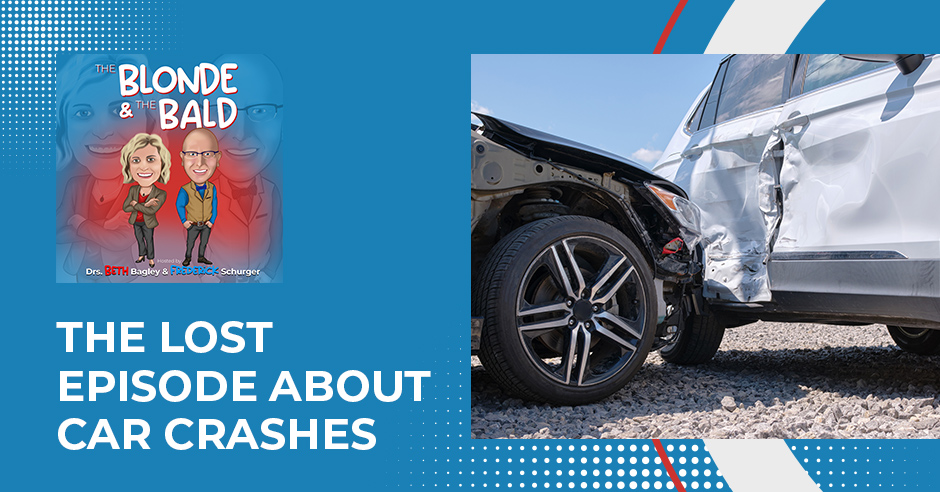
Do you know what happens when you record a podcast from home before a snowstorm comes in? You talk about car accidents and then forget that you didn't rename the folder!!! There is a lot of great information about car accidents, though, and you might hear this at the time that you realize your pain may have come from an accident several months ago! Tune in as Dr. Frederick Schurger and Dr. Beth Bagley share practical things you can do if you ever get into a car accident.
---
We are having fun on the show. We are wrapping up for the end of 2022. We’re recording this on December 22nd, 2022 at 5:00 PM on a very cold day. We’re both at home because we closed our offices early in case the snow was bad. What were they predicting for St. Louis?
They were predicting about 5 inches. We’re going to get 2.5.
That’s generous. On Monday, it was something like 8 to 10. On Tuesday, it was already down to 4 to 6. Ever since, it has been 2 to 4. Actual accumulation, they were saying an inch and a half. It’s gotten so cold that we didn’t get the snow.
It’s blowing hard. I bet it’s blowing harder in Springfield though because it’s always windy there.
I have a funny story. As these models and predictors come out with whatever it is, whether it is the virus that’s coming after you, the hurricane, or in this case, the snowstorm they were predicting, there were a lot of different models that they used to figure out all the math to say how bad something is going to be.
The most reliable predictor, and you have some of these in your office as well, was a nurse that came in with one of my patients. She was making sure she could drive and walk in. Her comment was her knees ache when the weather changes. In the cold snap wetness, she said she had that deep bone ache going on. She’s like, “I got nothing. We’re not going to get real snow.”
I believe that.
That, I find, is more reliable consistently than what these forecasters say. I hate to say it. Someone with my engineering and scientific background wants to believe in all of these nice technology pieces. I had no faith in that one.
You never know. There is such science to it, but then, there’s also such chaos.
The worst part is when I was growing up, I had five channels of TV. Even worse, by midnight, after Johnny Carson was done or maybe it was Dave Letterman that was on at that point in time, when that final talk show host finished up, they played the national anthem. They turned the station off until about 5:00 AM or 6:00 AM when the news started back up to tell you what the weather was going to be like that day and if there was any traffic or any problems. It was a completely different world. Here, you have a 24-hour news cycle.
At this point, it’s fear. I don’t want to say the bad word.
It is fear porn. Let’s use the word that is appropriate. It is all about what is going to scare you into watching, paying attention, and putting your eyeballs and attention to their channel.
The scarier, the better. Let’s get scarier.
The storm of the century is what I was hearing.
It’s named Elliot.
I’ve got a patient named Elliot. She was in. She was moody enough that I’m like, “If this was her, she’d be threatening to be this kind of snowstorm and then not deliver.” I’m okay with that. We got her adjusted so that way, she could have a Merry Christmas and not get cold.
I’m happy that some people got off school and that kind of thing. There are not going to be so many delays and people are still going to be able to get where they need to be. There are still some delays. I’m not saying there isn’t, but people get where they need to be for Christmas, which is nice.
This cold is no joke.
That’s what we have to be aware of. That reminded me of some of our patients with Reynaud’s. How much do you know about that?
Unfortunately, my wife’s got it. I know a couple of patients who have it.
Could you explain it? I don’t know a ton about it. I know what happens but what does she experience?
That’s the thing. Usually, in the extremities, you cannot get the blood flowing into your hands and your feet.
What does it look like when she gets it? It’s a color change that happens, right?
It is. Everything flushes. It doesn’t necessarily need to be a cold weather snap like this.
The temperature variation can do it. Even hot can do it.
That’s the problem. You can have it any time of the year. It could be happening in the middle of the summer and not just in the middle of winter. I put on heavy gloves to shovel and make a path to our garage. I didn’t have anything on my ear, so my ears blanched. It’s that same situation except it is extremely painful. It is cold to the touch because there’s not enough blood flow getting into the extremities. There is a neurological background to it, but quite honestly, it’s strange. It’s strange enough that I don’t feel like I’ve got a good understanding of it. You’re probably talking to folks who do vascular work day in and day out.
What people noticed with the people I’ve talked to is that the pain usually comes on when the blood flow returns. It goes from white to red. That’s when it’s super painful.
That’s like any situation. This is where it is a neurological issue more than anything else. The blood flow is halted. Once that’s halted, nothing is getting through. All of a sudden, everything opens up, if I understand it correctly. It’s like anything else. If you put a rubber band around your finger, you cut off the circulation. It’s the same principle except for instead of an outside force, it’s an inside force that’s preventing your body from working the way it’s supposed to.
I remember one of my professors in chiropractic school using that as a way to explain to people subluxation. It’s a rudimentary way to explain subluxation. If your finger is getting the blood cut off from it because we got the rubber band around, what’s the answer? Take the rubber band off. That’s the simplicity of chiropractic in a way.
If your finger is getting the blood cut off from it because you've got a rubber band around it, what's the answer? Take the rubber band off. That's the simplicity of chiropractic, in a way.
Our nervous system is being impinged by misalignment. A simple way to explain it is when we need to take the rubber band off, it is to move bones off of nerves. It’s a simple way. Chiropractors hate when we explain it, but honestly, most people understand it that way. You can look at it. You can dig down into it, in general. Nerves are affected when there’s a misalignment. Whether we want to call it pinching or not, I don’t want to get into that.
From the way the upper cervical world that we work in, when that atlas and axis go out of place, the ligaments holding that brainstem and spinal cord are effectively causing a pinch on the nerve except for it’s a pinch on the spinal cord. That is because the two ligaments that are attached from the inside of the bone to the spinal cord itself are coming off straight across.
With others, when we get down further into the upper back, they’re at an angle. That’s the best way to think about it. It allows for some flection back and forth, and some motion up and down in those lower areas. When you think about it, it’s got to be able to move. In the upper neck, at the base of the skull at C1, C2, and maybe even C3, which I’ve got to get some confirmations from some people who are doing cadaver studies, those ligaments are coming straight off. They’re very taut. They’re some of the strongest ligaments of the body.
If you’ve ever twisted your ankle, we understand that’s a weak ligament involved there. The ligaments that hold the upper cervical in place, if you have your head turned and you’re in a car accident, you may tear one of those ligaments around the upper cervical. Those ligaments, what they call the dentate ligaments, that come straight off the bones into the spinal column are some of the strongest ligaments of the body. They will not tear. In fact, before they will tear, they will do something called an avulsion to the spinal cord itself that will be more traumatic.
If you can imagine a ligament pulling out of a tissue, that’s what we’re talking about here. That would not be a chiropractic problem generally. Let’s pray that if you are ever in that kind of situation that there is a neurosurgeon that knows how to put you back together. It might be a traumatic and potentially deadly situation if those ligaments pull out of the spinal cord.
That brings up a good point of practical ways if someone is to get into a car accident. We don’t want to, but at this time of year, there are fender benders because there are icy conditions. Some things are high speed. Some things are low speed. Let’s say you are in a car. You look up and there’s a car coming at you. You can see it in the rearview. If you have a second to think about it, the first thing I would do is make sure my head is straightforward. Even a slight turn is not good. Face straightforward. Maybe even I would tuck a little bit. I’ll then make sure my head is against the headrest.
Your headrest should not be down the middle of your head.
That’s such an important thing.
It should be above your head.
I’m tall, so I have it as high as possible.
That’s the problem. For people like you and me who are tall, even having that thing as high as it can be, it is usually above the ear for us. It needs to be above the crown or the top of your head. For most people, you need to make sure that thing is set higher because that will protect you from a potential whiplash-style presentation.
A whiplash in general, so people can understand what that is. When my grandparents were alive, and I’m thinking back in maybe even the ‘50s, my grandfather was a chiropractor. My grandmother got a terrible whiplash injury. This was before the time of headrests. Headrests weren’t a thing. If you look back at older cars, if you’re looking at them, the seats go across and the heads were above the seats. Safety has come into play in why headrests are there and are not comfortable. It’s because what was happening is the seat was right there. A car would hit from behind and the head would go back. It goes back and then flies forward.
Yes and no. There are two parts to that.
Go for it.
One, it’s going back, but also, you are dropping down while your lower body is going up. It is not intuitive until you have seen it happen on a slow-motion camera video. I’ve done a cross-whiplash series, which was fantastic. In a normal whiplash, you drop down and backward. Your head goes back, and then it comes back up. You get this weird presentation. What it’ll end up doing almost every time, and your neck should have a C-curve facing backward, is it will invariably create an S-shaped curve. Quite honestly, it is torn ligaments. Your body doesn’t have the stability that it’s supposed to have to go back to where it’s supposed to be. A lot of people have excessive motion at individual segments which can lead to other health issues.
With whiplash, there is soft tissue injury. We also will have a bone misalignment. When I see a car coming, I’m going to tuck and put my head against there so that when I get plowed into my head, it at least doesn’t fly back at all. Hopefully, I don’t fly up at all. I’m sure I will a little bit. If you get hit hard enough, you’re going to have some motion. If my head was turned and I was leaning forward, I’m going to not only have soft tissue injury with that, but I’m going to have bone misalignment, too.
This gets into a different soft tissue. If you’re stable going and straight ahead, you’re going to tear some stuff up. It’s going to happen. You can’t avoid that. Let’s say I want to turn my head to the right. I have a hard stop. I can’t turn any further than that. It’s not because of something out of place, which is the same thing to the left, but because there are what we call check ligaments that prevent your head from moving any further.
When you have your head turned to one side or the other up or down, those same check ligaments that are balancing and keeping you from going anywhere else have the potential to get torn. It doesn’t take a whole lot of force. If my memory serves, as little as 30 pounds of force is enough to tear one of those check ligaments in the process. It doesn’t take a whole lot. It’s a cross-ligament. This is a check and stability ligament. This is why we have people who are in car accidents, especially women over men because they tend to have an intrinsically weaker ligament structure across the board. Here’s the worst part. You and I are sitting in a car. All we are doing is sitting. We’re sipping our coffee after a seminar.
I’m drinking tea. I want this to be correct.
That’s fine. You can have tea. I’m having coffee. We’re both sitting. We’re like, “We’re going to get hit rear-ended.”
We’re doing the exact same thing.
Our feet are on the ground. Neither of us is touching whatever it was.
That being said, we are about the same height, too.
We’re both at six feet. You’re going to have more trauma in a car accident than that because the female anatomy has a weaker ligament structure. This is why we are hearing about any sort of these trans athletes.
They’re in contact with female athletes.
If it’s a female athlete with a trans woman, that can lead to a real problem. We heard about this with the NHL and their thing.
The NHL or the NFL?
It was the NHL.
If in a whiplash we are both in the car together, female anatomy is more prone to these injuries because intrinsically, we are made differently. I don’t want to say weaker. I’m going to say differently. Being hit in a certain way, we’re going to get more of the accident. It might be why we see more women with exactly whiplash injuries than men in my office. I never thought about it that way.
The female anatomy is more prone to injuries because, intrinsically, women are made differently. It might be why we see more women with whiplash injuries than men.
I would phrase it as not necessarily there’s a weakness in an engineering sense, but it is a less densely-packed ligament. That is the technical way to describe it. Here’s the worst part and what men have to appreciate when they’re in a car accident as well. It’s not because you’re a male in a car accident that it means damage has not happened. With the ligament failure point, if we’re on a graph and going to my right is more failure whereas zero failure or this is a failure for a woman and this is a failure for a man, it doesn’t matter for women. If you pass this point, you have problems. For men, if you pass this point, you have the same problems. It needs to be addressed and fixed. Otherwise, life will not get better for anyone.
What would you recommend to a patient or not a patient yet? Chiropractors aren’t going to be open until after Christmas. Let’s say they got into a car accident. They’re safe and sound. They’re at home. What would you recommend they do first?
First, they’re going to do some good research to make sure they got a good chiropractor they’re going to who understands it.
We agreed that they were going to find a chiropractor, but they can’t get in.
They can’t get to one of us. If you already have a friend who’s a chiropractor, get in sooner than later. That’s going to be the first. The sooner that you can get in, the better.
I agree. This person cannot see us for 3 or 4 days.
The reality is simply you’re going to take it easy. You are not going to overdo it. You’re not going to say, “I was going to start that new workout routine. It’s Christmas. I’ve already had all the Christmas parties. I’m going to start my workout routine a week early.” Don’t do that.
Should they put heat on their neck?
I’m torn on that. That is really a good question.
We’re told that you’re supposed to ice an acute injury.
The entire rest, ice, compress, and elevate, I don’t know. Apparently, it was made up on the back of a napkin at some conference. Science doesn’t support that. All of these things are bad. The simplest thought would be to take it easy and get back into your routine.
I have no research to back this up, but gentle, slow ranged emotion multiple times a day to keep things moving.
Do gentle, slow range of motion multiple times a day to keep things moving.
I would agree.
Back in the ‘80s, you would see people walking around with a neck brace on. They’re like, “I had the whiplash.” You’re like, “Let’s put something in to stop it.” If you have a broken arm, you need to have something on there to stop the movement so that the bone goes together.
What’s curious is unless it’s joint, they would not recommend putting you into a sling anymore to immobilize the entire arm.
You don’t want to immobilize the joint, but I’m talking about an actual broken bone.
That’s a different kind of immobilization.
Back in the ‘80s, they’d have neck braces. They’re like, “Why don’t we see those anymore?” We come to find out those were not a good idea because people got hurt and the injuries were prolonged with those. I would recommend a patient to talk to their doctor about this. I’m not your doctor, but you can come to see either of us. Do gentle ranges of motions going left and right and ups and downs.
I would emphasize the ups and downs, that yes nodding motion, more than I would even do the left and the right. I tell my patients as we’re doing their neck exercises, which are yeses, noes, and a head glide, to go into it as far as they can comfortably. Stretch is fine, but going into pain is no good. That’s the way I would approach it. Until I could get in, the sooner the better.
I agree with that.
This goes back to what’s going on with the NFL and their injuries on the field. When you have an NFL team, their medical team is there as well. You usually have a PT. You probably have an orthopedic surgeon on staff to do an evaluation. Oftentimes, these guys, if they injure a knee, a shoulder, or something that requires surgery, they’re going to get them into surgery within about 24 hours if not sooner. The reason is because of the way the ligaments heal. The ligaments in that first 48-hour window after any injury, whether it be that, a car accident, or a twisted ankle, if you don’t get back into normal motion and/or correct the injury, it lays down some of the least strong ligaments of the body. It takes months to years to fix that, or never.
If they can get everything stitched and moving the way it’s supposed to, the ligaments will align properly. You can imagine building a house. If there’s some tragedy, all you do is put up sticks from the wind. You grab a bunch of sticks and put those over the windows instead of putting up a sheet of plywood. Sometimes, you’re like, “Those sticks work except for the water that’s still coming in through the window.” The plywood is a temporary fix, but it’s certainly better than not having a window. This ends up being a tricky situation as the body is healing itself.
I would probably do some yes-nodding motions and some noes. I’d be more generous with the yes-nodding motions than I would with the noes because if we get too much rotation, it may aggravate things in an unhappy way. The primary motion of the bones in the spine, especially in the neck, is a forward-to-backward motion that is conducive to that yes nodding motion.
With that being said, if a person, let’s say, on a Monday morning on the way to work gets into a whiplash situation, should they take the rest of the day off and go find an upper cervical, especially Blair chiropractor?
That might not be a bad idea. If you get into one of those car accidents, and all of a sudden, you’re like, “I’ve got a problem.” The sooner, the better. For you and me, we get somebody who’s been in a car accident as a new patient. I tend to do a more thorough workup so that way, we can work with the insurance on some of those. Whether I’m taking the insurance or not, I still want to make sure that all the exam covers what needs to be covered because sometimes, we find stuff along the way. On top of that, we need time to analyze those films, and oftentimes, it’s a busy day for us. We’ve got time to take the picture.
We don’t have time to look through them. That way, at least, if you come in the day of, by the next day we could maybe get your first adjustments done. We don’t want to rush that process.
We want to make sure we’ve got everything figured out and know exactly how to put the bone back into place. That way, the body can start healing.
One of the last things I want to go over with whiplash is that we, as doctors, often see chronic whiplash cases. These could be 10, 15, 20, or 30 years down the line when they finally come in for care. They may have degeneration at this point. They also have, sometimes, disease processes going on. I saw someone with fibromyalgia. We could go back many years as something we see.
There’s a relationship between these neck injuries and not getting the care you need when they happened and then the disease process turning on over time. Your body can only handle so much. I want to tell people it’s not too late. That injury may have happened when you were 20 and now you’re 60, but it’s not too late to get the care you need. We see miracles in our office when people have been dealing with symptoms.
I’m thinking of a woman with fibromyalgia. That chronic pain for years and out of most of her pain in weeks, which is remarkable. That doesn’t always happen with fibromyalgia so quickly, but there’s no other reason other than an upper cervical subluxation or that cranial cervical junction being shifted. It’s not too late to get the help you need. You need to find the right doctor. We’re in the Midwest, but there are some of us all over the country. Go to the Blair website, which is BlairChiropractic.com. It’s not too late. Come and get the help you need.
There’s a diagnosis that a lot of people aren’t appreciative of what is called Cranial Cervical Syndrome. This is a number of different things that include vertigo, back and neck pain, and severe migraines or headaches. There are a number of other bits and pieces to it. I’ve got a lot of patients that when we start saying, “Take a look at this list. How many of these do you have?” they’re like, “All but that one.” What that ends up being is certainly the instability of the upper neck oftentimes from a car accident whiplash-style.
It’s also a situation where the tonsils, not the tonsils in the back of your throat but rather the tonsils coming off of your brain, have dropped down past the skull. They’re starting to cut off communication of your cerebral spinal fluid. This is why a lot of people are much more relaxed. They have fewer problems when they are laying on their back because those tonsils pull back up. As soon as they put themselves in gravity, those tonsils start pulling down into that space. We call this Cerebellar Tonsillar Ectopia, which is horrible. CTE also refers to something else in the world. I can’t remember what it is, but it’s also a whiplash football type of thing.
We have technically two CTEs that can be related to football. Dr. Scott Rosa and Michael Freeman put out a paper several years ago. It said when they looked at MRIs of people laying down and when they were seated upright in gravity in these upright MRI units across the country, there was a significant increase of people that did not show any of these cerebellar tonsils dropping down past the brain. There was a significant increase when they sat them up and started dropping down.
It only makes sense. It’s gravity.
More importantly, that’s when they have their symptoms. The doctors aren’t asking these questions not because they’re not smart, but because I don’t think they’ve put these pieces together. The question is, “When do you have your symptom? You have this symptom. You have it all the time.” The patient says, “I don’t have a problem when I’m laying down.” It’s like, “You’re resting,” but they don’t put together the part of the biomechanical change that shouldn’t be happening.
That’s the other problem. This should not be happening. Yet, in some people, especially people who’ve been in a car accident, we see this much more commonly. I want to say it’s something like 25%. It is a big increase between the two groups. Don’t quote me on that, but I know that number. I’ll have a chance to look it up. We can revisit it at some point in time in the future. In any case, we help people like this all the time. People need to be aware of it.
That’s why we do this show. It’s not just so we can talk to each other. It’s so that the people tuning in have some resources available. If you go to urgent care or the hospital after a whiplash, you get an X-ray. They make sure nothing is broken. That’s great.
They might do a CT because the CT gets all that information, plus it takes to see if there’s any bleeding that isn’t supposed to be there. Sometimes, that’s what you see.
It’s all good stuff. I’m happy with that. They’re like, “Take it easy.” I agree with that. They then give them muscle relaxers, either some painkillers, ibuprofen, NSAID, or something like that and say, “Good luck.” There is no follow-up with that. It’s, “Go on.” Most people don’t go back to urgent care and say, “That didn’t help.” They say, “I’m hurt. It’ll get better.” Maybe sometimes, it does. In general, when you’ve had a whiplash injury, you’re going to have misalignment that has happened from it. You may be one of the lucky ones where it went right back where it’s supposed to, but typically, it doesn’t. That’s why we exist.
We told the story of how I was looking down to my right at a stop sign or a stop light and all of a sudden, I had a Jeep back right into me, knocking me out of the place.
It wasn’t even high speed.
I was certainly stopped. A lot of these things are never at high speed.
It doesn’t take much.
People have died in injury accidents at less than five miles per hour. Let’s put that in the mix. It exists. It happened in Florida, which is where this is referenced. Slow-speed accidents are accidents. Motor vehicle collision is nothing to laugh about. As long as it’s not to you, especially, you can laugh at somebody who you don’t like, but even then.
You can’t. That’s mean.
You shouldn’t. I know.
You can see it on TV and be like, “Okay.” It could be fake stuff or Hollywood stuff.
Is there anything else you want to talk about?
It doesn’t take much to cause this injury, so find us.
We’re wrapping up. This should be the last one for 2022. We’ve got a lot to be grateful for. We’ve had a good year.
It has been a great year.
You’ve got a new associate that’s going to be fantastic.
She graduated from chiropractic school.
I know. I’m excited.
Dr. Shilo Trowbridge is joining Precision Chiropractic, which is exciting. We are waiting for her to become licensed in the state of Missouri. She’s working as a chiropractic assistant and helping me, but she’s not allowed to adjust patients anymore until she gets her license. It’s a weird limbo.
The irony of the situation. She’ll have her license before too long. I’m certain. We might be able to get her certified this 2022.
That’d be great.
We can get you certified this 2022 in Blair.
I’ll do it. I hear there’s a new certification process.
I hope so.
There’s something new brewing where I can become instructor certified. I’ll have to go through that.
I don’t know if it’s that easy, but you still have to go through the X-ray analysis portion. We’ve got to figure out if they fixed that yet. That’s another story.
I can do it.
You’ll get it done. You’re overdue. We both got our CBCTs going. We’re having a great time with that. That is fantastic. I got my system upgraded a little bit to be more similar to what you have.
It still works the same. It’s a better computer.
It’s a different computer. No one will know the difference. It’s a functional thing. There was some security stuff that makes this a little bit better.
That’s good.
We had a good year. I’ve seen a lot of patients get better.
It makes it all worth it. There’s a lot of stress from being a business owner and trying to keep a practice going, especially the last couple of years during the pandemic.
That’s in general. It’s been a good year. ‘23 is going to be a fantastic year.
I’m excited for ‘23. It’s going to be a great year.
We’re going to find some people. This will finally be out as we start ‘23. I hope. I suspect we’re going to see some amazing things. We’re going to see some amazing recoveries.
I can’t wait to share it with everyone reading. I’m going to do a better job documenting some patients as they come through.
The other thing that we’ll end up doing here for ‘23 as people are tuning in through this episode here, we’re going to start getting set up to do some interviews with some patients. That way, they can tell their story. We can have fun that way.
That is super fun. It’s powerful hearing someone’s own story.
Let’s wrap it up. This is going to be a good place to call it for 2022. I know I’m going to go try to go hunting as long as it doesn’t get too bitter or too wet. I think it’s going to be a little bit too bitter and too wet, so we’ll see what happens.
My website is precisionchiropracticstl.com/.
Mine is KeystoneChiroSPI.com. We wish you all a great and prosperous 2023. We look forward to you tuning in soon.
Happy New Year, guys.
Happy New Year.
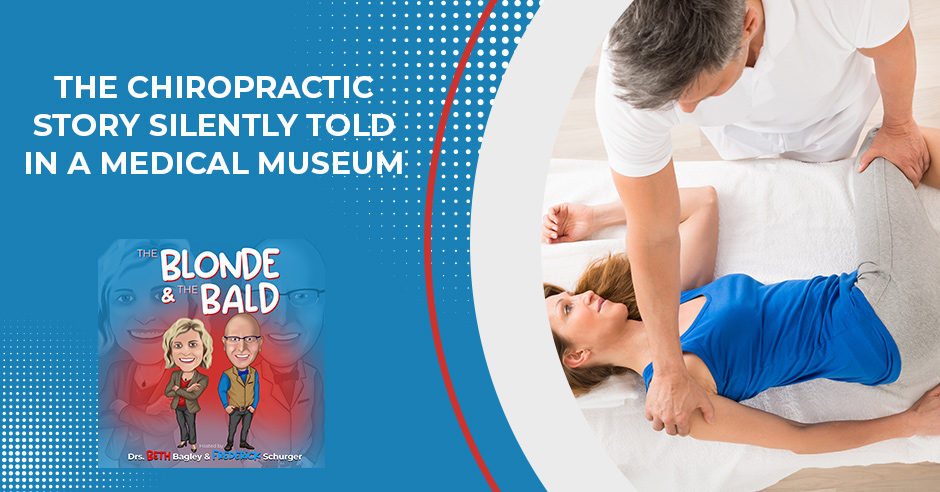
It's easy to break something when there's a misalignment in your structure. Our body is designed with certain fragility, and misalignment in our body can greatly affect our health. Dr. William Blair happened upon a case of a man in a medical museum who showcased proof of his theory of how bones get stuck out of place in one's neck. Join us as we tell the chiropractic story silently told in a medical museum.
Listen and read the full blog post here
Have you ever gone to tell someone your problem only for it to fall on deaf ears? It's a miserable situation, but it is worse when it's your health condition, as you express it to your doctor. Too often, we hear from patients that no one can figure them out, and maybe it's because no one has paid attention to them or asked the right questions. In this episode, Dr. Bagley and Dr. Schurger share their insights into Eagle’s Syndrome, the plight of unheard patients, and why doctors are inattentive to them. The CBCT changes that dilemma in the industry because, with the scanner, doctors can now see even the smallest misalignment in your body. Tune in to this episode now.
---
Welcome everyone to The Blonde and The Bald. We've got Dr. Beth Bagley here. She's at home.
I am at home.
I, Dr. Frederick Schurger, for those of you who are reading, I’m still sitting in my office because I was running late with a patient. There were two patients and we'll talk about the situation of the one from a larger scale here in a little bit then I ran late with my next couple of patients and the last patient needed a new image.
It still takes time, even though it’s faster than it used to be.
It's five minutes to do the whole thing but it's still five minutes. When it's five minutes at 5:45, it takes a little bit of time. We normally like to start this right at 6:00 and I'm looking at my clock now and it's almost 6:50. This is how sometimes life goes, especially in an upper cervical practice when you have these difficult tricky cases that come on in. Let's talk about one of them. Let me pull up this picture you sent me. Before I pull this up, I'll hit the button in a second.
There is this discussion back and forth within the chiropractic profession, where a lot of people say, “You don't need X-rays. It's based on a superstition or it's based on religion.” I'm like, “Holy cow. What got under this guy's burr?” This was a newer paper that got published that I'm referring to. Where this guy out of Australia basically said these folks because of their founders, they're referencing scripture and mumbo jumbo, hocus pocus. I don't know what the heck he's trying to have.
I don’t have a problem with referencing scripture but we have science too.
Especially when they start saying, "We don't need X-rays to figure stuff out." Let's say this patient comes in and for those of you who are reading, this is a styloid process that is largely ossified. It has turned into a bone. In fact, sometimes, Dr. Bagley is putting a finger down her the side of her neck.
It's the size of an index finger. The ear to the hyoid bone, which is in the front of your neck where your cartilage is.
If you've never heard of the styloid bone, it's because generally, it's maybe half an inch long. It's small. It comes off of your skull just outside of your atlas area then drops down. It’s part of a muscle that comes down and joins the stylohyoid muscle, hence the name. Muscles are easy. Once you understand that muscles describe where they're starting and ending and you understand the styloid process and the hyoid bone, it's easy.
About 70% of them are that easy.
It's like, “What are the origin insertions of the biceps?” I'm like, “It's been ages since I've looked at that. I'm not going to be able to say it's right in here then it's right up here on the shoulder, especially the clavicle or the collarbone,” for those who want the layman’s term. Sometimes they're that easy and sometimes we get a crazy picture like this one here where somebody's entire muscle has ossified.
It’s the whole muscle. Other than that, like this little bit at the bottom. It doesn't look like that bone is touching or it hasn't joined with the hyoid but it's close.
This is important because if you don't see this thing, some of these are thin. This one is honking. As I said, index finger size. Some of these are thin and there is a concern that a atlas adjustment could break them. Let's address that real quick. With this technology, the cone beam CT, we are seeing these things all over the place. It's called Eagle Sign. Dr. Bagley, why don’t you explain what the Eagle sign is?
The Eagle sign is seeing an extension of the styloid process. It can lead to a syndrome, which is the Eagle syndrome. What else is the sign?
The Eagle sign is the extension of the styloid process. It can lead to eagle syndrome.
That's the sign.
Not everybody who has this has Eagle syndrome, which I find interesting.
Where's the crossover?
For someone like this person, I would assume that he would have the symptoms of it and maybe he has a couple. Every time I have to look it up, I'm like, “What symptoms were?” He doesn't have these symptoms.
What are the symptoms? Why don't we get into that? Since you looked at it more recently than I have.
Neck pain is associated with elongation of the styloid process or calcification of the styloid weight ligament clinically characterized by throat and neck pain radiating into the ear. There are other things too, which include difficulty swallowing, feeling something stuck in the throat, tinnitus or ringing in the ear and neck, or facial pain. This guy has neck pain and he feels unsteady all the time and foggy. Honestly, he has a subluxation of the atlas.
A lot of other problems too in the entire spine. If you look at this, a lot of people say, “Doc, I have the arthr.” It's like, “Yes, you do.” This guy does. That's got a lot of arthritis there and degeneration. If he's an older guy, no surprise. His body has been through a lot and the question is, how long has he been out of adjustment and out of proper biomechanics? His body is breaking down because of improper biomechanics. I've got a great idea.
His initial injury that he never got help for was at work in the 1990s. This has been some years now.
We can see that there's stuff that's out of place here. Again, this is one of those that we can work around.
I will.
The cone beams have been showing this so much more. The question is, how many of these have we missed over the years to any significant level?
I don't think that we would have missed this one on an X-ray, I'll be honest.
Certainly not. This one should have come up bright and honking and you're like, “Why does my atlas not show up properly?” In fact, I'd be curious to see what the X-ray view would look like in this case to get a sense of what it would have looked like otherwise. Generally, these things are small. Any concern about the smaller ones getting broken seems to be unfounded. As much as we find these on cone beam CT and we didn't see them on X-ray, suggests to me that they were there but they’re not visible in the same manner. If they were there and we didn't know about them and yet we were still adjusting in this area, we did not have the traumatic issues with sometimes what's effectively the breaking of a bone.
Any concern about the smaller bones getting broken seems unfounded because as much as we find these on Cone Beam CT, we didn't see them on X-ray.
The question is if a person like this was to get a rotary style, diversified adjustment.
Would it be a problem? I don't know.
I don't know the answer to that either. If you're reading, what I’m doing is I'm turning my neck to the side and head up. Now I've got this finger thing and it's not jointed so it's just stuck. When I turn my head, it's moving with my skull, not necessarily with my neck. A quick whip could possibly injure some structures in the neck, in my opinion.
Certainly, either it would injure or be very uncomfortable for this individual to get what we would describe as a traditional chiropractic adjustment or even manipulation from some of the PTs or DOs that do that work. Again, it's good to know what you're working with. This is the importance of an X-ray in these cases. In any case, I had a great idea but I think we're going to have to save it for another time because it's sitting in the back of the office. I don't want to run back there and grab it now. Is anything else you see on this that's of interest?
He's got severe osteoarthritis in the facet joints and I honestly haven't gone through much of it yet because he just came in. I'm excited to work with him though. He’s a sweet guy. You’re going to like him.
I think he's going to do great once you get his head on straight. What's interesting is as you see in the lower part of this, this is all osteoarthritis. These are the facet joints back here. These are the intervertebral foramina where the nerves and a couple of arteries and veins come out at each level and then these are the vertebral bodies here in the front. There’s lots of degeneration. We can't see it here because of the angle that you took this at for the atlas. We do not see that at the atlas, which is always a curious factor. Did we talk about Dr. Blair's proving of his theory in the war museum?
I think we hit on it but I wish I was at work because I have the book that he wrote. It’s a little booklet.
Maybe we'll retouch on that next episode, so let's make a note of that.
If somebody wants to tune in next episode, it'll be one of the research things that Dr. Blair did. It’s looking at a body in a museum. It's interesting, so we'll go over that next episode.
We'll explain more about it. There was a lot of arthritis except at the atlas. The atlas was the last joint for that man to fuse. There is a natural situation where the atlas does not get very arthritic. Our body protects it in one shape or form or another before that one breaks down even though it's out of place. Wrap your head around that one. That's getting back to the biblical verses. There's good knowledge there. As one of my patients and I like to describe, “We are fearfully and wonderfully made.” We understood anything that's going on there. That was the point I wanted to point out there.
We don't see a lot of arthritis at C1 and the occiput at the cranial cervical junction. Below it, we see a ton of arthritis.
You can see it all the way through up and down. Depending upon the patient, some are older patients like this. I've seen patients who have no arthritis. I've got a 25-year-old and a 26-year-old young lady come in and her neck is a complete mess. She had a ton of arthritis and I think I've mentioned her in the past. She was told she'd be unable to have children because of everything she was going through. We got her adjusted and within about a year, she got pregnant and had a beautiful baby girl.
We're getting old, Fred.
We are getting old because that's the only direction. It flows. We keep on looking like we're younger because we keep ourselves in good health.
We’re good at adjustments. You were telling me about what you called the unheard patient.
This is the case that I had right before my 5:00 patients came in that ran me behind. This young lady had been a patient before. Quite honestly, we'd had a little bit of these pieces put together at that point in time. I've learned a ton over the years. As I was looking at her MRIs, I don't know if she had brought them in at the time.
Because of her circumstances even then, she only came in one day. She was from out of town. I'm like, "We're going to work with you," then she never came back but her health has happened to deteriorate and nobody can figure out what's going on with her. There are a lot of things at play. I have several of these cases. These people who are otherwise, their brains are working the way they're supposed to but yet they are not feeling great and the doctors they go to.
St. Louis might be a little bit better because you've got the large metropolitan area. Here in the Midwest or in the Central Illinois area, we've got some great doctors but they're few and far between. Finding the right doctor who can start to put together all the pieces is becoming more problematic and these patients simply become unheard because they go in for their visit with their medical doctor. You have seven minutes to figure out which pill I need to give you.
She's got multiple problems. They're suggesting EDS at the very least. She's got some torn ligaments that she doesn't know how she ever got into this pinch as it were because she doesn't have any car accidents sitting around that say, "It was this car accident. It was that car accident. I played sports in high school."
It could be any of a number of things but she does remember somehow she was grabbed by the head. Either case, whatever it was. She's in a pinch and her health is deteriorating. I see so many of these. I've got another patient. He was a military vet Marine. I've got to sit down with him and we'll have a long talk on the show here in the future.
He was honorably discharged for health issues after a car accident. They couldn't figure out what was going on. He's like, "Doc, once we get the head on straight, now all those symptoms start to dissipate. If it's between visits or on the weekend and I know I can't get in touch with you to get checked, all I have to do is apply a little bit of pressure and lay back and all of a sudden, I get some of that relief.”
He's been identifying this for a while but yet his doctors are not looking at the upper cervical work that we do here. Oftentimes, they dismiss it. His anecdotal experience as being, “You're just making it up. Let's get you to the psychologist or psychiatrist and get you on some meds to help you on your way.” You feel so bad for these people because they don't have answers.
The desperation sometimes turns. For a doctor who also doesn't have the answers, these patients turn into an annoyance and then get treated not like people anymore but as an annoyance or they're crazy. That's what gets me. It hurts me because people will come to us in desperation. Some people come to us before they're at that point. I love that but for many people, we’re the last resort and they're going to go to this crazy chiropractor who does this weird thing to their neck because their aunts, sisters, or friend said they should go.
They come to us and they tell this story. To us, our brain goes, “Nobody's checked the neck.” That's where all of the nerves go through. Why has no one checked the neck? The doctors just didn't know. It's not like they're trying to be mean and disrespectful to these people if they want the best for their patients. At least most of them do. A show like what we're doing, what we try to do is we're getting the word out because there are people desperate.
If you read this and you're like, “This sounds just like me or my daughter,” or if you're a doctor and you're like, “This sounds like four of my patients and I have no idea what to do with them because we've tried everything,” we need to check the neck. If there's not something going on, we can usually tell that before we even do imaging because the testing we do before the imaging helps us determine if we even need to do the imaging. If somebody does not have any of the signs of misalignment, we can typically see that on a physical exam.

I am confident. I've had two cases in my years of practice where they came in and I'm like, “Let's do an exam and see what's going on.” The one was a young lady. She rides horses now and I think she's planning on training horses, which means I haven't seen her for several years. However, for the first time, I checked her mom and her sisters were in regularly. She was holding them like, “We don't have to do anything until she falls off that horse.”
The other one was in her late 40s or early 50s young lady that was having some problems with vertigo but not vertigo and some dizziness. There are eyes, ears, then there's the upper neck that all can lead into vertigo. Sure enough, she checked clear of everything that I checked it twice. I'm like, “If your neck gets screwy and you're in a car accident, come see me. I will take care of you at that point in time.
I can't help you if there's nothing for me to do.” I sent her off to an optometrist who does a lot of balancing with the eyes. I think she got better. It's just a matter of finding the right doctor for the patients. Sometimes, the other half of it is you got to say, “We got to start somewhere. We got to work you through things. This is not going to be an easy path.” Recognize that sometimes the pain and the experiences and healing do not always feel good.
You and I have been talking about doing a detox. This one that I'm on is very gentle so far. I'm going to get a little bit crass here. I hope you're not eating at home. I've heard that through the parasite cleansing that this thing does, people will have parasites come out. It's not just coming out of number two. It can be coming out of your nose, eye, or gums. I don't want it.
At the same time, I don't want those in me. If they're going to come out, please come out but I also will have nightmares over that. Thank you for that.
You're welcome. I've got an Australian joke that I need to send you. Did I send you that one about the cute little guy? Let me go get this other picture. That was funny so that everyone can appreciate the funny.
Have you heard of a product TRT? It is a zeolite. Anyway, it's supposed to absorb heavy metals in the body.
I have not. That does not ring a bell.
It's TRS detox and it's a zeolite suspension.
I'm not familiar with that but so many of those things, they're like a tea.
It's one of those things that costs a lot of money and it could just be water. I follow some of those in Facebook. I do take a lot from what people say because again, we hear so many of these stories of, “I did this and this happened.” It's the same thing over and over again. There has to be something to it. For this product, there have been changes in autism symptoms and things like that. It's usually moms and I'm not going to say it's dads sometimes that are giving it to their kids. Also, adults are putting that out there. If somebody does a little research on TRS, that could be another way to look at to explore detoxing from heavy metals.
Back to the point of the healing process. The healing process doesn't always involve feeling good.
That's what my point was. Many people will talk about it in that Facebook group. When they start taking the spray, they dip. They can release some parasites too but they will have symptoms. Sometimes, they're pretty nasty symptoms as they're going through it. It sucks but it's cool.
Here's the funny.
“Not all Australian animals will kill you. Don't get me wrong. He wants to, he just can't.” That's cute. What is that?
I don't know but for those of you reading, it is some cute little mouse jaguar-looking thing but it's the size of a mouse sitting on the thumb.
That has to be photoshopped. Otherwise, I want one.
It looks adorable. It's one of those funny things. For these people who are these unheard patients and I feel like I'm seeing a lot of them. They've been in and they do great.
They do. It's unbelievable. Also, when you find a doctor, we care about you, want the best for you, and we'll tell you if this isn't going to work. If we don't think you're a candidate for care, we don't want to waste your time or waste our time or waste money. Honestly, we're not in it for the money. We need money and keep our lights on but that's not why we do this.
The truth is chiropractors in general tend to be listeners. We have a caring heart. If you are suffering and need someone to take the time to listen to your story and put it together, we also have science brains. We care and we have science brains, which don't always go together. I was talking about neurosurgeons and I was like, “If I was having neurosurgery, I don't need you to be warm and fluffy with me.”
In fact, I don't want them to be warm and fluffy.
I don't want it. I would rather you be Kirk, to the point, and be good.
We need Spock. I want Mr. Spock. I don't want Captain Kirk.
Mr. Spock would be able to fix it with his fingers.
For those of you who are reading and feel that you're one of these unheard patients, also realize that we are not going to spend three hours with you listening to you moan and groan.
It's not about complaining.
We are going to listen to you and figure out, “What can we do and what are plans of action?” We don't have to do the plan of action but we do need to identify that there is a plan of action that can be taken because sometimes, the best point of action is we got through half of the exam and we took a picture. “You are exhausted. I have a waiting room full of patients tomorrow. We're going to do some more time tomorrow because this takes a lot out of us too.”
We joke about our three days of office time then the rest of it seems off. Some of that is decompressing to deal with our own lives and everything else that's going on around us but we’re going to sit down and talk to you. We're going to spend more than seven minutes. We're going to do an exam and take pictures if we do find that we need to.
We probably will then we'll go over those pictures later.
More importantly, we're going to review those pictures.
We'll review them and then show you them. Many patients will say, “Did they show you the MRI? Did they show you your X-rays or your CT scan?” I almost never hear anyone getting to see their pictures. They get a report that goes under their portal.
This patient had the same thing and she's like, “No one has looked at this.” Granted, have I had 100 extra hours of MRI training? I have. That's part of my stuff and you haven't. The reason you don't want that is because you're going to pick my brain and there's nothing wrong with that.
I do that.
You do but the point being is we've got to figure out what is best for every individual as opposed to being a cog in the machine because we are not cogs in the machine.
We must figure out what is best for individuals compared to being a cog in the machine because we are not cogs.
No, I don't want to be. I don't want that.
It's ugly. The Mandalorian, for those who are not paying attention, episode 3 of season 3 was out. For those of you who are watching The Mandalorian when this comes out, you'll know what I mean about the weird cog in the machine episode. Have you watched it yet?
The last one we watched ended when he went underwater. I've not watched the new one?
You'll understand that once you watch it. You'll be like, “This is interesting,” anyways.
I don't think medical doctors want to be that either but they are stuck in a paradigm now. That's not their fault and there are some that have escaped it.
It's a little bit of their fault.
It's not the current generation's fault.
When you are in a system and I'm going to say it is, only because they're playing by the rules as opposed to trying to step out of the game. We stepped out of the game right off the bat by going into chiropractic and said, “Something is wrong with that paradigm.” COVID made that obvious because as I'm listening to Dr. Peter McCullough's podcast, he was talking with his new partner who basically said, "I'm going to do some research and figure out what takes care of Coronaviruses," and looked at, "Here's a paper written by Anthony Fauci that says chloroquine is good for getting zinc ionifers into the cell.” Anyways, this guy was already outside of the system and his patients during early COVID did well. It's a matter of having doctors that are paying attention and doing their due diligence.
When people get frustrated, they're like, “Any of the doctors that helped me don't take insurance.” I hear that and I'm one of them. I don't directly take insurance. I give you a super bill, which is a bill that allows you to just turn it into your insurance. At that point, some people get paid and other people don't. I don't take the time to play that game because that game then puts us as a cog. We're back into the cog and we have to obey their rules and follow their recommendations. It’s like, “You only get six visits and that's not covered but this is, so do it this way.” I'm like, “We're not going to play that game because that does not help our patients.”
Dr. McCullough is coming out of the insurance game to work with this group. They are not quite concierge. It's a slightly different form of that. The funny thing is they started figuring out the dollars with the co-pays and everything else. Most patients are paying a little bit less than they would if they would have gone into the system and met their deductible. It's still less than your deductible. For some people, everything works just fine. This was me when I first got introduced to chiropractic. It's like, “This stuff isn't too bad,” but it's also the same situation where sometimes it's not a one size fits all. If you find yourself in the non-one-size-fits-all place, you need to look outside the system.

Yes, and that's okay. Some people might be like, "That sounds crazy.” They're not living your life. They're not inside your body. You know what you feel like and what's true. There's mental illness out there. I do know that but many people are being called crazy or that they need to be on psychiatric medications because they don't have an answer and no one's checked the neck. You got to check the neck. You got to do it.
I think that's a great place for us to wrap up and we will be back with another episode of The Blonde and the Bald.
I'm Dr. Beth Bagley. I'm in St. Louis, Missouri. You can find me at www.PrecisionChiropracticSTL.com.
I'm Dr. Frederick Schurger in Springfield, Illinois, KeystoneChiroSPI.com. We look forward to you tuning in to the next episode. Send us comments and everything should be going live very soon.
Please share.
It should be closer to getting questions answered and we'll be more than happy to share any questions that you have.
If you post questions and it's something that we want to bring up in the show, we will gladly bring it up and talk it over. Have a good one, everyone.
Among the medical diagnostic imaging modalities emerging recently, CBCT is one of the significant methods. The Cone Beam Computed Tomography Scanner is replacing X-Ray in many chiropractic offices. In this episode, Dr. Bagley reviews her CBCT to help explain what we're looking at when we take imaging and why it's complicated & essential to get right the first time! Dr. Schurger explains why CBCT is better than other MRIs. Let's dive in and see why Cone Beam CT Scanner you should install in your chiropractic office!
Listen and read the full blog post here
I believe that's correct
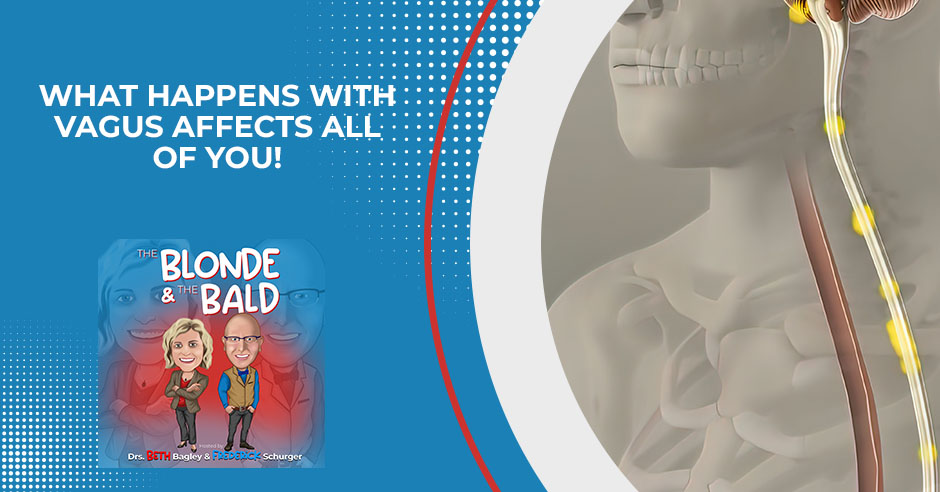
Did you know that your parasympathetic nervous system that controls your digestion, heart rate, and immune system? When there is an imbalance in it, it affects everything else. In this episode, Dr. Bagley and Dr. Schurger delve into the cranial nerve you didn't know about, the vagus nerve. The vagus nerve is the main nerve of our parasympathetic nervous system. Join us to go over what the "wandering" nerve does for your health & how some problems with your health start in your neck!
---
We are having a grand time. We won't tell you why, but we are having a grand time already.
We should record when we're just talking about the show because I think it's going to be more interesting than most of our shows, but there are curse words that are said that we're not going to say, all sorts of things.
The people who do production have to do extra work on the show.
Sometimes there are hard people that come into the office. We love them, we give them all of our energy, and it takes a lot to be a doctor.
Some days it takes a lot out of us. We joked a couple of episodes ago about, "It doesn't look like you work a whole lot of hours." No. The hours we work are the hours that are allowed. The hours we don't work are us decompressing and doing other work.
We just don't see patients during those hours.
Oftentimes, it's a lot of, "I need my quiet time. I need my thing." This is a full day for us, but after a full day, I go home and I eat dinner. My dinner is consistently the same every night.
It’s meat with eggs and meat and fats.
It's eggs and bacon, and there is some extra fat. You are correct. I have my little bit of keto brick, and then maybe if I'm craving popcorn, I might pop up some popcorn.
He's so boring.
Yeah, it is. It's great.
I know you love that.
I know I have that, and then I'm going to decompress. I'm going to read my book. I'm going to figure out what's going on in The Wheel of Time series now that I have been exposed to this piece of fiction.
Is that the books you're reading right now? I just watched that on Amazon. They woke it up a little bit.
It's the first book. It's a weird little adaption. There are parts that, after having read the book, and then going back. Books are always better. I'm begging questions as to why they did it the way they did it. I don't care. Whatever. Probably because they had to get people on contract.
One of the things I ran into in the office was a patient having done some research on the vagus nerve. She had some weird reactions in her body to a dental procedure. I love that you're going to be going over some of this stuff because I want to relearn some of the things because you're good at that. What I will try to do for everyone is, what he says, I will bring it into an English translation out of science translation.
The presentation and the slides that we're going to use were from something that I presented to a group talking about, how do we measure this? What is the importance of measuring these? They're really small electrical impulses in the body and how important they are. It's at a high level, it's taught to doctors, and doctors need to understand this, but we got to translate it down to the patients. Sometimes we got to translate it down for ourselves so we can even understand it.
For those of you who are tuning in, there are some stuff here that might be worth watching on YouTube as we do this. One of the phrases that I like to use is something called attenuated autonomic insufficiency. It boils down to say, the automatic operating system, as it were, of your body, if it is out of balance, it is attenuated. It is less than where it's supposed to be.
Is it keeping you alive? Yeah, but there's a difference between being alive, in a coma, and effectively in a vegetative state. You have high-level athletes. Michael Phelps comes to mind, who for twelve years was at the prime of his swimming game. Now, you've got other people in other sports who are doing the same thing, trying to figure out how they can be healthier and stronger.
You were joking about the meat diet, but Dr. Sean Baker, one of the lead folks in the carnivore world, in his '50s, is setting all-natural, never done drugs as far as hormone-replacement type stuff in that regard. He is still the world record holder in one of these rowing competitions. The man is not any small man. He's probably 6'4", I'd guess around 210 to 220, somewhere in that range and deadlifts all the time. He played rugby and football through high school and then into college. He can do these sprint-level activities largely because he's doing things to bring up his ability for his autonomic nervous system to function better.
Real quick, I want to explain autonomic. You said automatic, so that's a great way to say it. In school, if you've taken a psychology class, you may have heard something like flight or fight, which is a part of it, and he's going to go over that. I want you to start thinking about there are two types of nervous systems out there.
We've got the stuff that we can control, like moving our arms and legs and taking a deep breath in on purpose. There are the things that we don't control, which is if you're sleeping, how often are you breathing? If a bear walks in the room, what does your heart rate do? That's the difference. You don't have to think about your heart rate right now to make it go. We're talking about those automatic functions of the body.
When we start thinking about the motor functions of the body and the voluntary stuff that we are doing, as you pointed out, how fast you want to walk down the road is dictated by how fast you can walk. Whereas these autonomic impulses, you've got two sides to this. You've got your voluntary stuff, and then you have your automatic stuff that you can influence, but it's always going to run at some level.
This is the question. How do we improve that autonomic function through various modalities? Chiropractic is certainly one of the very powerful ways that you can do this, but one of the crazy things is, I broke down and bought a 110-gallon feed truck tub, filled it with water, and I had been in it every morning. It is awesome.
Are you putting ice in it?
No, it's outside and it's sitting at about 45 degrees, so it's cold. I'm not going to pretend that I'm in there for ten minutes. This is not, "Go sit and enjoy yourself in the hot tub." This is, "I've got a minute. The timer goes off. I'm done." I tested the water temperature in the afternoon. It was sitting probably about 45 degrees, which is probably where it's been sitting all week. It's been up to the 50s here in the area.
Even though it's February and it's supposed to be way colder than that.
It's supposed to freeze.
You'll have an extra cold bath.
I might have some ice that I got to crack through to get into it. We'll see what happens. The point being is, that kind of cold exposure influences this autonomic response and improves our body's ability to function by doing some things. By immersing yourself in the cold and in order to stay there, you have to control your breathing. As you control your breathing, you start impacting these other systems, which is crazy because it starts getting things better, especially as you get used to it. The irony of the thing is, after being in the cold water, I get out and I'm drying myself off. I'm going back into the house to get my coffee, but it doesn't feel nearly as cold as when I was in the water.
Anyway, let's talk about this autonomic automatic nervous system. There are two sides to this coin. The fight and flight, which is our sympathetic. This is when you have a lion chasing you and you got to get away right now. It doesn't obviously need to be a lion. It could be a lot of different things. There are actually three Fs, but this is a family-friendly show, so it's fight or flight. Most people can figure out what the third one is because it's not family-friendly. The parasympathetic side is rest, digest, and heal. There's a balance. You need both.
If you only rested, digested, and healed, you'd never get out of bed. In the morning, your sympathetics come on, they turn up. You have that cortisol reaction that helps wake you up and warm up your body, which is why I hop into to cold to kick that into overdrive a little bit. When you're ready to go to sleep as I'm reading my book, usually, what happens is one aisle goes this way and the other one goes that way. The words start turning on the page and I'm like, "I'm going to put the book down and I'm going to fall asleep." That's the parasympathetic trying to bring my brain down to say, "You're ready for bed."
If your sympathetics and parasympathetics are out of balance, a lot of people will have sleep issues like insomnia. "I can't turn my brain off when I go to sleep." That's because your sympathetics are going high and your parasympathetics are turned off or low. That chiropractic helps a lot with that, but we're going to talk about some other things too. Keep going.
The sympathetics, there's a couple of different spots that it sits. It sits basically in the brain stem area. Certainly, part of it in the cortex. Some in the hypothalamus, but this is all brainstem, and this is high-level brainstem going on down. Most of the sympathetics traditionally have been taught that they come out of your spinal cord along basically your upper back T1 through L4. Yet there is some older research that suggests it has higher levels that it comes off the spinal cord up to C4 or C5. There's some question into that, and then there's a couple of ganglion, something called the stellate ganglion that comes up from those lower ones that come up into the neck. Sometimes words come out of my mouth and I'm mixing stuff up, but I'm pretty sure that's a stellate ganglion.
Maybe you need an adjustment.
I'm probably pretty good, but that's another story. It is a superior cervical ganglion. You have a couple of others that are coming off the cranial nerves for both your ophthalmic C5 or cranial nerve 5, which we were talking about. This is part of that trigeminal nucleus. You've got the cranial nerve 3, which is largely involved with eyesight.
There are some sympathetics on that side. That's a lot of your pupilary light reflex. That's a slow response. As funny as it sounds, it's actually a slower response to the dangers around in your life. Unfortunately, we live in this fight or flight response most of the time. The parasympathetic side is more rest, digest, and heal. It tends to be faster and we have that ganglion. In fact, the parasympathetic is what causes it to contract as opposed to open up. Most sympathetics are going to cause a contraction of vessels. Certainly, it's going to raise your blood pressure. It's going to warm you up. It's going to get your heart rate going.
Get your muscles ready for action.
Whereas the parasympathetics are going to start driving you down and start relaxing you. We've got a couple of different nucleus. I'm not going to get into it. We're going to focus in vagus and that's going to take a long time. You have the pelvic nerves coming off the sacrum or your tailbone. We're not going to cover the pelvic nerves. We might cover them peripherally, but the vagus nerve is what I want to focus on.
Vagus nerve is also known as cranial nerve 10. A cranial nerve is a nerve that doesn't come out of the spine but comes out of the brainstem area. That's all the way at the top of the neck, above where you can feel your skull. Cranial nerves are important and they pretty much are what's keeping us alive. Our brainstem is really important and those cranial nerves are, too. Vagus gets a lot of attention because it is impacted a lot. I see a lot of people with trauma responses. I don't know if we call inactivation or activation. It's almost like inactivation like it needs to be activated.
The vagus nerve is also known as the cranial nerve 10. A cranial nerve is a nerve that doesn't come out of the spine but comes out of the brainstem area.
We're going to touch on that because in the concussion space and a lot of other health problems, this has become one of those, it's not quite a buzzword, but it's definitely a buzz because it's becoming more popular. Certainly in chiropractic and how we apply it, but also, in most healthcare and most medicine are looking at this a whole lot closer than they used to.
The vagus nerve is unique because it is one of the few cranial nerves that not only drops out of your skull but also down and affects so much in your body. We're going to go over the branches of that. This may come out a little bit more academic, but it helps to visualize all these pieces. Most nerves go one direction. The vagus is unique because it has directions in and out of the brain. Your afferent nerves, they come back in, they tell you what's going on. Your efferent nerves are going out. I believe that's correct.
It's two-way communication within one nerve bundle where a lot of the nerves can only just be one-directional and there are other nerves that do other things. This one does both.
It's mostly the ones that are looking out into the system and feeding back into the brain. It has some that go out, but for the vast majority, it's looking at what's out in the body and feeding back, which is why 70% to 80% of them are considered afferent. The hub of the vagus nerve is something called the nucleus tractus solitarius. This will come back a little bit later. We call this the NTS. This is a major hub.
What is that and where is that?
It's in the brainstem just above the atlas, which is the first interesting thing about it. When I call it a hub, let's say you have a dozen USB devices that you're interacting with for your computer. My laptop has 2 USB inputs, but I need all 12 of these feeding in. They make little adapters or little hubs that allow you to put multiple things in, and then one wire comes out and your computer can make sense of all of that stuff coming in.
This is exactly that kind of hub where it might be aggregating all of that information into that one spot. It then disseminates stuff to the rest of the body on that parasympathetic and rest digest side of the nervous system. That's why I like to have people think about it that way because this is your major input to tell your body, "How do I start relaxing? How do I start doing things?" A lot of those afferent nerves are the perception for inflammation of the body.
Are you going to go through where these nerves are going?
Yes. That's next. The first branch comes around the back of the spinal brainstem cord area and innervates the meninges on either side of your brain. Let’s talk about the meninges real quick. There are three levels. We’ve heard of meningitis. Meningitis is an inflammation of the surrounding tissue. It’s not the brain, but it’s the tissue around the brain.
It’s like the covering.
We have three levels of meninges. We have the dura, which is considered the tough mother. This stuff is really rigid. It is trying to protect your brain from everything outside. In fact, that’s the blood-brain barrier that’s going on. The next one is the arachnoid which has a lot of vessels around it. That one’s a little bit tighter to the brain. The last one is the pia. The pia mater is right on top of your spinal cord and your brain.
This is the stuff and the material that interacts with your brain and your body. You have three layers to prevent you from directly getting stuff into the nervous system. You've got a box on your computer. You don't want anything to get into the box, especially if it's sitting underneath your desk and your foot decides to go into the CPU. That's a bad thing. That's why we have these things.
It is a protective layer.
It is, yet it has sensory inputs via the vagus nerve. I'm not going to get into any more detail on that because that's a whole other ballpark.
The interesting thing I want to bring up, which might validate some people is, if someone feels like they have pain in their brain like a migraine, can we relate this possibly to a vagal nerve problem?
Could be. I would not rule it out, but a lot of that brain-burning pain may not come from this.
That could be something else.
I would say that's probably more of a vascular issue overall.
I think it could be a mixture, in my opinion.
I would not call this a pain fiber necessarily, although 70% to 80% of it is looking at inflammation. There may be other inflammatory things going on that are subclinical, yet you can still feel it. We're on the second branch now. This is what they call the auricular or Arnold's branch. It helps control some of your perception. A dermatome is basically your skin sensations, as far as how the nerves perceive what's happening at the skin level, which is different than how your body moves. It's really curious.
The placement's different. If someone has shingles per se somewhere on their body, it's usually on one little section on one side of the body following the dermatone and following that nerve that's going to the skin. Hopefully, you never had shingles, but if you know someone who has had shingles, it's very commonly across the side.
The second branch comes around the auricular, so that's all ear, what they're talking about there. This is on the skin level. In fact, if anyone's ever heard of some of this auricular therapy that exists where they go into the ear or that daith, that is influencing this vagus nerve.
This is what I bring up about they get daith piercings to stop migraines. That's what people are doing.
People ask me, "Does it work?" I said, "It's only $30. It's painful.” A lot of people like that.
I’ve had some patients say anecdotally that it’s helped. I’ve had some that said they didn’t see a difference.
Same. In fact, one of my patients said she got both of them hoping it might help, but it didn’t do anything. The only thing that was touching her migraines was getting her head on straight, but her comment to me was, “I’m going to keep it so that I look like I'm the cool mom."
They're hard to see. I don't usually see them on patients until they're on their sides about to get adjusted. I was like, "You've got one of those." They're on the outer ear but inside of the outer ear. It's not easy to see.
Once you've got it, you might as well keep it because it was super painful and maybe it's helping a little bit. This is a lot of inner ear stuff that's being influenced by that second branch. There is some influence as they're using electrical vagal stimulators to improve vagal tone overall in the body. There are some really good evidence that we should focus on the left ear over the right ear, which I will come back to.
The third branch is the pharyngeal, the pharynx, and the soft palate. It's your mucus membrane. All that secretory IgA stuff that we've been talking about on and off, that's where this is being influenced by. The pharynx and the soft palate are important because if you've ever had a popsicle stick without the popsicle on it stuck into the back of your throat and had the gag reflex, that is that branch of the vagus nerve. If you're the kind of person who says, "I can brush my teeth and I never gag," your vagus nerve isn't working.
It's not a good thing. You're supposed to be able to gag.
A gag reflex is a good indicator that this is working properly. I'm teasing for something coming up here in a little bit, but if you're not gagging on the right, we have other problems. The fourth branch is the superior laryngeal nerve. This is getting into your thyroid cartilage or cricothyroid area, so the tension of your vocal cords for your higher notes, notes that I cannot hit, but Dr. Bagley can very well.
A gag reflex is a good indicator that this is working properly.
Another aside is I'm a singer. When my head is not straight, I absolutely can tell a difference in my voice and my ability to study my voice. There are a couple of things, but I do think that this is part of it.
It wouldn't surprise me that we have some vagal tone influences. I'll come back and explain why the atlas can influence the vagus. We're on the fifth branch. More recurrent laryngeal nerves, but it addresses the muscles around your larynx, esophagus, and trachea. What you're describing as your ability to sing as well is coming through here. All the mucus membranes are influenced by that vagus nerve.
How about dry mouth?
Definitely could be related. There's an autoimmune condition where all the mucus membranes dry up. It'll come back to me after dinner. The sixth branch is the right and left superior cardiac. The deep and superficial cardiac plexus is formed here. When we say deep and superficial, superficial is right at the top of your skin, on the surface. Deep is when it starts going deeper into either the nerves, into the muscles, or into the body overall. That's what we mean by deep and superficial.
We're getting into and creating the cardiac plexus, so this is the cardiac supply for the heart or it ties into the cardiac supply for the heart along with the sympathetic nerves. If you have run a mile and you're waiting for everyone to catch up and you're trying to catch your breath, this is where the parasympathetics are trying to bring down that heart rate back to a normal level.
It’s Sjogren's.
That's it. Thank you. I don't have to think about it after dinner now.
I thought that's what it was, but I was like, “I'm going to look it up so I don't look dumb.”
This is why the internet is great. This is also why if the internet goes down, I will have reference books handy.
You and my husband both. You guys love your books.
There are a lot of them. Here's the interesting thing. This is the last branch of the vagus nerve before it enters the chest. So far, the vagus nerve is taking care of the ear, it's coming down, getting in the back of your throat, getting into your thyroid area, esophagus, and larynx, and then it starts sitting right up here. Before it goes into the heart itself, it starts mingling with the sympathetics for the heart, and then it drops into the chest.
This is the first branch in the chest. You have your inferior cardiac branches that are deep into the cardiac plexus. The left originates from the recurrent laryngeal nerve which is another nerve that's out there, but it influences the atrial ventricular node. This is the bottom half, the inferior cardiac branch of the heart, but the right branch. The left branch gets the AV node, which most people don't think about. The right branch is the sinoatrial node. This is your lub dub. A big part of your heart rhythm is controlled by the sinoatrial node. This is where pacemakers are being influenced.
This is why stemming the right ear might be a problem because it could have a direct impact on that sinoatrial node. This is one of those, talk to your doctor if you are investigating this pathway because there is some back and forth as to whether or not that's safe. Certainly, it is also a concern for us as upper cervical doctors.
When we have a patient coming into our office who has a pacemaker, when we get them adjusted, that pacemaker is geared to run at a certain rate and help make sure that they're working good. A lot of people, after they get adjusted, can have pacemaker problems. You need to be aware of that and make the patient aware of that after their adjustment. There might be some changes as well as they might need to call their cardiologists and have a tune-up just to make sure everything's working the way it's supposed to. Same thing applies to blood pressure as well when you get an adjustment.
I see that more often.
I think that's going to be more common.
I haven't seen a pacemaker in a long time. Maybe they're not doing it as much.
Wouldn't that be grand?
I think because they're doing ablations more now, maybe they're not going to pacemakers as much because honestly, I remember I saw them more years ago, but I don't see them as much.
The other thing is we've gotten much better about how we address heart disease across the board. Heart disease and cancer run back and forth between number 1 and number 2 as far as what's going to get you. Certainly, we've learned that we can be more aggressive with heart disease and get people the kind of care they need. Maybe what ends up happening is the vagal and sympathetic tone that goes to that sinoatrial node doesn't get shot or doesn't die in the process. There's less of a need. I'm speculating. We should probably pose that question to Dr. Peter McCullough and see if that seems to hold true.
Let's move to the eighth branch. It's the second in the chest. This one innervates the lungs. This is going to help you get that better deep breath. It is supplying the front of the lungs and it joins with the sympathetics because the entire breathing process is a dance between your sympathetics and your parasympathetics.
The entire breathing process is a dance between your sympathetic and your parasympathetic.
If you decide you're going to lift a heavy weight overhead, you're going to need more air and you're going to be breathing heavier, so that's going to come up. As soon as you put those weights down, you can relax and that will help. It's that back and forth. The third in the chest is the ninth branch. This is going to the posterior or the back part of the lungs. Similar functions. The tenth branch is the last in the chest. I have the chest defined as everything in the ribcage before we get into the abdomen.
Above the diaphragm.
The tenth branch is the last in the chest. It's for the esophagus and it's pretty much left and right. It has been pretty straightforward at this point. After this, the left goes one direction and the right goes a different direction. The left vagus at the eleventh goes to the anterior gastric, which doesn't sound like a big difference, but it's going to the front and the top of your stomach. The right goes to the back and bottom portions of the stomach. You've got two different influences there. If you've ever thought about, "I have a heartburn. I wonder what's going on there," how is heartburn in the right vagus where all the acid is largely pulling due to gravity affecting the heart also in the right vagus? Isn't that curious?
It is curious.
Are these direct? I don't know. When the right vagus has problems, the right vagus has problems. It might affect multiple aspects of the body. The twelfth branch is the left vagus, and it's just all left vagus at this point. It's all right abdomen. It's going to get your liver. Basically, everything around the liver, which is the hepatic plexus. Plexus means it's all over the place, and hepatic is liver.
It mixes together. That's the end of the line. That's where the vagus stops working. It doesn't go into your legs and toes.
This is the end of the line for the left branch or for the left vagus.
Where does the right go?
The right stays in the right abdomen. It's influencing the liver as well, and it's also the end of the line, but they're a little different. End of the left vagus is in the right abdomen. The right vagus, that side looked very familiar. Still, twelfth branch, we're on the right vagus. This is the celiac branch that then goes to the adrenals, kidneys, pancreas, intestines, especially the upper two-thirds of the colon influenced by this, and the spleen.
The right vagus is a workhorse all through and through. That's a huge influence through there and this is the end of the line for the right vagus. When you think of the nerves coming from the brain, the intestines, only the upper two-thirds of the colon are influenced by the vagus nerve, whereas the lower third is coming up from the pelvis.
This is why there's not a whole lot of information on this generally because it's not been studied as much because everything that happens in the vagus influences your body. Whereas the pelvic nerves, that happens too. It's less sexy. No surprise that control of your colon, rectum, prostate, reproductive organs, bladder wall, and various sphincters, people are like, "Those are supposed to work, but we're not going to pay attention to that."
They're kind of important.
It really is. That's coming up from the sacral and your sacrum affecting your lower part, but there is a lot of coordination from the spinal cord between these sacral nerves and your vagal tone. There's a connection there.
That's why doctors, I'm one of them, that does the Logan basic technique are very into this information.
It makes sense because sometimes the thing that's bugging you up top is in your hips. Sometimes the thing that's bugging you in your hips is up top. It's good to look. I do a little bit of Sacro-Occipital Technique in the same way as you do with the Logan Basic.
Our number one is always the Sawyer Technique because we can cover so much on that.
The great thing is I've seen many cases of bedwetting, which should be pelvic nerves get better just by adjusting the atlas. The thing about the sympathetics is they tend to be much slower than the parasympathetic supply through the right vagus. The sympathetic supply to the sinoatrial node.
We're back in the heart.
It has the capacity to get your heart rate up above 200 beats per minute.
That's pretty fast.
Yeah, it's very fast. That effect can be seen after two seconds. It peaks at 4 seconds and it'll end after 10 seconds. When you got to get going, it's going to ramp everything up, but it's only going to be around for a little bit because hopefully, you got away from the lion. Maybe your friend didn't, but hopefully, you did.
Just push him in the way and run.
Just remember, when you're putting your shoes on, take your time to tie your shoelaces because you only have to outrun your friend. You don't have to outrun the lion. Isn't that horrible? That is miserable.
At the Saint Louis Zoo, there's a bear that has escaped twice. He's the smartest little bear there is.
What's his nickname going to be?
It should be Houdini.
I don't know why I kept on seeing the Cocaine Bear show up on various podcasts. I'm like, “That's weird but it's curious.” In any case, back to the heart running in the way it's supposed to. The parasympathetic supply to the heart through that right vagus, the same sinoatrial node, affects it in less than 1 second, peaks within that second, and lasts for only 2 seconds. It is 80% to 90% faster than the sympathetic supply. It's using a different chemical.
The speed differential is the neurotransmitter that they're using. It's a low frequency versus high frequency, which we'll come back to here in a moment as to why low and high frequency is important. Norepinephrine activates an enzyme complex that takes 8 to 10 seconds to complete, which is that sympathetic because you can see it ends after ten seconds.
Whereas acetylcholine, which is funny because the best place to get choline is fresh eggs, is an ion channel activation and it only takes a second to cause an effect. This is why it runs faster. We're looking at the brainstem from the back. We see a number of different places that influence the nucleus tractus solitarius. One of them is this intermediate nucleus that goes right into there, so it's one step removed.
Anytime you have a nerve going into a nucleus, one nerve going into a nucleus will have a profound effect on that nucleus. When that nucleus then will have multiple places that it's coming off of to other places, the next nucleus still has a pretty profound effect from step one. What is interesting when we start looking at the upper cervical is that there is a possible role in autonomic or respiratory control. It's because the muscle spindles in the cranial cervical junction around the atlas and axis directly influence, go right into that intermediate nucleus, and then one step away from the nucleus tractus solitarius.
What you said is important, but I want to get it to the point where someone who has not gone to school for this would understand it. The muscle spindles, which means the information that the muscles give to our body, so muscles give information constantly to us.
This is the information coming into the body from the muscle sensation, knowing where it is in space.
The muscle knowing where it is in space and sending that information, that's what a spindle does. It's going to directly affect when it's up here in the top of the neck, up to the upper cervical of the cranial cervical junction, it directly is influencing what's happening in the nucleus, which is like the hub of cranial nerve 10, which is also known as vagus.
Almost. First, this is the hub before that. This is the nucleus intermedius that has a ton of influence to various things, but one of them ends up being the nucleus tractus solitarius. If I was Seven Degrees of Kevin Bacon, it's exactly that. Let's use Joe Rogan as an example. If I wanted to tell Joe something, I'd have to go through several intermediaries to get my message to him. Odds are my message will not be the same message.
Let's use Tim Pool as my intermediary. I probably can get connected because I subscribe to his thing. I could probably get one of them to entertain an idea that I presented. They present that to the next level, so the intermediary one then presents it to Tim. Tim says, "This isn't a bad idea." He sends it to Joe, but it's got to go through Jamie first, and then it finally gets to Joe.
It's not my idea at that point in time. It's pretty much Tim's idea at this point in time because Tim says, "That's a really good idea. I'm going to present that." These guys are good because they won't take credit along the way, but somebody's going to take credit along the way if it's going to somebody else. This is where you get muddy water in between the signals between the hub to the hub. However, for whatever reason, let's say that Tim Pool and I become great friends.
That would be your dream, by the way. "My friend, Tim."
I like wearing beanies. Tim introduced me to Joe, and then Joe says, "I like that idea," that's that two-step difference. That is where the nucleus intermedius talks directly to that nucleus tractus solitarius and then can have that profound impact on the parasympathetic or the rest, digest, and heal side of the nervous system.
Let's back it up to patients who are tuning in. When you were looking at the thermography graph that we do every visit, when we take that graph, we are getting a snapshot of what your nervous system is doing. How stressed out is it? If it is stressed out and it's stressed out in a way that has caused you to go out of adjustment, we see the same thing over and over again. It is not a healing pattern because you only have two states of the body. Rest, digest, and heal, and fight or flight. Effectively, fight or flight is breaking down and dying. It gets you away from the lion.
It should turn off.
If you're always stuck in that fight or flight, then you are slowly breaking yourself down. You get sick, exhausted, and pass out because you're like, "I don't have time. I don't have the energy to do this thing." When we see that pattern present, which is controlled by the sympathetics, we know that there is a problem that something has raised your stress level.
Does that mean you're out of adjustment every time? Not necessarily. I had a patient who was like, "I feel great, doc. Mom was in to visit." His mom's like 89 to 90. His mom is a go-getter. She's all over the place. He comes in and he's like, "Yeah, I feel pretty good. I think I'm going to be holding today." I check him and something's off on the graph. I check his legs and he's off. He's pulling a half-inch-short, which all is telling me he's probably out of adjustment.
I'm not finding the indicators to tell me that he's out of adjustment, so I have him go rest. The graph changes a little bit. The legs are still doing something weird. I basically tell him, "You have some underlying stress going on. Take it easy. This is not the day to go run a marathon. However, be aware of your body because you may need to get in next week to get checked beforehand."
This is where we can start to see the bigger picture of how your body is in or out of adjustment or just under stress. I see that fairly regularly with people. There was a day where every time I took a graph, I looked at it and I'm like, "We're getting you adjusted." When I went to do the leg checks, that was confirming what was happening. This is where all of this nervous system comes into play. I think this graph and picture is a lot, but once you start to piece pieces together, you'll know.
Someone who's a patient or someone who's interested in upper cervical care and is not wanting to be a doctor. In general, just know that there is a relationship between the top of the neck and the cranial nerves. We're trying to explain how that then affects the hot button issue, which is vagus or vagal tone.
This also goes to the impact that the upper neck has on the nervous system on a much larger scale, so it's not just fixing your neck for your neck pain. It is affecting everything throughout the body. Whereas I love traditional chiropractors, but if I've got a problem in the middle of my back, I know guys who pop that left, right, and center all day long. That is not going to have the same profound effect of the entire body and getting it back into balance.
A lot of people are like, "Why don't you pop my back?" It's not that I couldn't. I did know how to at one point, but I absolutely study and am very proficient at adjusting the top of the neck. Just because I've taken all that time to do that, a lot of times I don't need to adjust the lower stuff because it gets better. If it does, there are 50 chiropractors right around me that can do that for you. I do the thing that they don't do.
I want to wrap up with a couple of things because we're going long here. Both of us have had full days. The first picture is a heart rate variability picture. These two red pictures of the red stuff, they're actually the same data except for the data at the top has not been corrected. There is a technology called heart rate variability. Oura Rings and WHOOP Straps are becoming more popular. Apple watches sort of have it. The Oura Ring sort of has it. What it's looking at is the beat-to-beat intervals that are going on.
We do a couple of other things. Certainly, we do the thermography and we do the pupillary light reflex in my office. We're still seeing what that all pans out to be, so we'll get a better sense of how well your nervous system and autonomic balance are working. One of the things that we know about this heart rate variability and why these two pictures look so different, and yet it's the same data. It's because the one on the bottom looks like the lub dub.
This is the traditional PQRSTU wave. This is the wave that the heart makes every beat that it makes. If you look at the one on the bottom, you can see that PQRST wave presenting properly. The one on the top needed to be corrected by hand. This is a five-minute sampling. It doesn't come out looking right until you do each and every beat. This ends up being the problem with most of our devices is, they're using some algorithm to get it close.
This is why good HRV measurements, 1) the equipment costs a lot of money. 2) It takes a lot of time. 3) The reason I like the Ouras and the WHOOPs, the stuff that is looking at you overnight is it gets a bigger sample size so that algorithm cleans up the data better than what a five-minute sample would do. A good five-minute sample with the right equipment will still give you a much better indication of where you are. There are 3 or 4 different measurements that they use for this. One is called SDNN, which is an overall measurement of your variability.
Before we go way into this, I want to say what you haven't explained yet is heart rate variability.
That's what I was going to talk about. Let's start right here. For those of you who remember the old keyboards that had a drum track on them from the '80s. The problem with those, the early ones, is you would have such an exacting beat that it would drive people crazy and it didn't sound good.
Was it a Casio? Is that what those were?
There were Casios. We had a Yamaha. There were a bunch of different brands that were playing with this. The problem was, when you had a beat that was constant like that, it didn't feel good as the music goes, which is why when a drummer who's playing a really good beat, they're grooving. They're having some fun with it. They're setting that beat. The beat's pretty much there, but there's a little bit of back-and-forth tension that goes on.
The same tension happens in our bodies. The more variability that we have, the healthier we are. The less variability or if you're more like a robot, odds are you might be a robot and that's bad for your health. You want that variability in your system so that your body works better. There are a number of different frequency measurements, which goes back to the acetylcholine and norepinephrine mentioned, where it was like high frequency and low frequency. The acetylcholine happens quickly. When you do the frequencies, it's one over time.
If it only takes one second, you do some math, 1 over 1 second is a very high-frequency number, whereas one over a big number is a very low-frequency number. Sympathetics tend to be more low-frequency. Parasympathetics end up being high-frequency. In fact, it was largely the Russians who figured all this stuff out.
They've done good research in this field. They did really good science. If you can read a little bit of Russian and get into their old databases of all their health stuff, there's a lot of good health information in there. There are a number of different ways that we can figure out and piece out these frequencies by looking at the heart rate and then running it through algorithms to figure out what's going on. The vagus nerve largely influences that. This is a large portion we're looking at.
If you have a healthy vagus nerve, vagal tone, or whatever you want to call it, you will have a good amount of heart rate variability. If you have a poor vagal tone or your vagus nerve is not working right, it doesn't vary much. It becomes robot-like, like the Casios or the Yamahas of the '80s.
If you have a healthy vagus nerve, vagal tone, or whatever you want to call it, you will have a good amount of heart rate variability.
Correct, even though some people still collect those things.
They should. They're awesome.
Some of those were really good. This is why daily readings in the morning are probably the most ideal. As I said, I like the Oura Ring and the WHOOP because they give you an overnight sampling. The more data you have, the better picture you get because you can fudge the data a little bit to say, "I did really good tonight." Whereas other nights, maybe less so or if you got a smaller window.
There are a number of apps on the phone that work with a Polar heart rate strap that you could do every morning when you wake up. Put a slap on the strap, take a five-minute reading, and see where you're at. There are different ways if people are interested in doing this on their own. In fact, I would recommend if you are interested in doing this. Instead of trying to find a doctor's office that has heart rate variability, I would invest in one of these technologies to measure and see where you are. That's going to give you a better picture all the way around. Dr. Bagley, let's wrap it up. Any other questions?
I know you could talk forever on this, and you have before. In general, I think it was a really good quick overview. I know it didn't feel quick, but there are lots more. A quick overview on sympathetics, parasympathetics, the powerful vagus nerve, and one of the ways that we can test it which is heart rate variability. In general, we see incredible results with Blair Upper Cervical Care and how the interactions with the vagus nerve can happen. We see changes in how people's digestive tract works, how their heart's working, and how their breathing is. This could be an explanation of why we're seeing this so much.
There are incredible results with Blair upper cervical care and how interactions with the vagus nerve can happen.
I've got a second thing I want to quickly hit on. When the vagus nerve comes out of the skull, it actually comes out along the parallel to both the carotid artery which is on the inside and the jugular vein on either side. It's sitting in between two large vascular pieces. The carotid arteries tend to maintain good muscle tone.
Arteries, in general, have muscle tones. It's sitting right on the front part of your atlas with the carotid and the jugulars on either side. We commonly see on MRI when there's a subluxation present that one of the carotids sometimes, but oftentimes one of the jugulars is occluded, basically shut down and not working the way it's supposed to, which the vagus is right here. It's affecting the vagus on that side, too.
What you're saying is it's not just the interaction at the brainstem, but it's maybe a physical interaction between the atlas bone, that top bone in the neck, and the vagus nerve itself that's coming out.
That absolutely may be possible. Multiple components and multiple pieces. Many times I have somebody come in with, "Doc, I got neck pains and migraines. I had this lung problem that has cleared up recently." I'm like, "Did we talk about a lung problem?" "No, I never mentioned it. It had been around so long. I don't even think about it." It's one of those things. What are all the pieces to the parts? Can we point to one thing? The only thing I keep on pointing to is the atlas.
I do that a lot, too. It was so good to talk to you again. I hope the people tuning in have heard some things that they enjoyed and also understand better about how your nervous system works. If you could leave us a like, a subscribe, or do a little comment, that always helps. If you have questions, throw some up there. We will be looking at those and answering your questions in future shows. I'm Dr. Beth Bagley and I'm in St. Louis, Missouri. You can find me at precisionchiropracticstl.com/.
I'm Dr. Frederick Schurger, KeystoneChiroSPI.com in Springfield, Illinois.

It was a particularly nasty cold & flu season this year, but that doesn't mean Dr. Bagley & Dr. Schurger won't see you when you're feeling bad. Heck! You might even benefit from getting checked and adjusted in that situation! Dr. Bagley & Dr. Schurger discuss getting in to see them when you're under the weather. Dr. Bagley mentions that COVID tends to pick on people who are ill. But as Dr. Schurger says, "Keeping people in alignment, healthy, and getting them in when they are sick helps mitigate Long COVID from lingering." Tune in to this episode with the Blonde and the Bald!
Listen and read the full blog post here